Tag Archives: race

Affirmative Action

Hörsaal

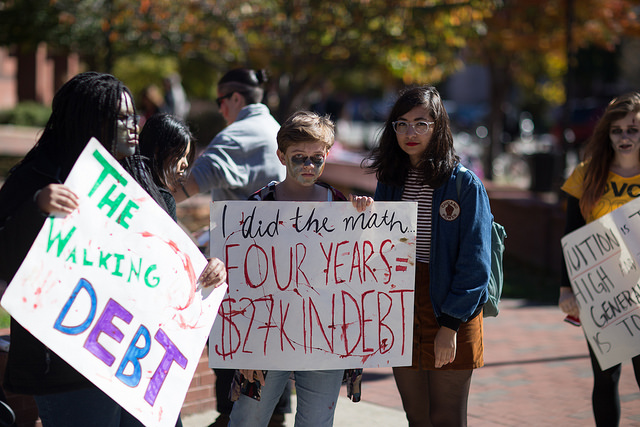
In November, Arizona joined California, Florida, Georgia, Michigan, Nebraska, Texas, and Washington by banning affirmative action in higher education.  Miller-McCune recently reflected on how these bans are failing to “keep pace with the changing demographics” of the United States.

Take the case of California, as reported in Equal Opportunity in Higher Education, a new book on the state’s voter-approved ban on affirmative action known as Proposition 209. In 1994, four years before the measure went into effect, when colleges were giving a boost to applicants based on race, 38 percent of high school graduates and 18 percent of University of California students were African American, Latino or Native American. In 2008, after a decade with the ban, these minorities represented nearly half of high school graduates but only 20 percent of UC students.

“By stepping back from its commitment to affirmative action, we believe California and other states and colleges have contributed to an increase in racial and ethnic stratification,” wrote co-editors Eric Grodsky, a sociologist at the University of Minnesota, and, Michal Kurlaender, a professor of education at the University of California, Davis. Within college types, [underrepresented minority] students tended to shift from higher- to lower-quality colleges and universities. … African American and Latino undergraduates in the state of California may be worse off now than they were 10 years ago.”

Peter Hinrichs, an economist at Georgetown, also weighs in on the effects of these bans.

Taking a broad look at college enrollment and racial composition across the country between 1995 and 2003, economist Peter Hinrichs found that affirmative action bans have no effect on the typical four-year college or the typical student. But at public universities in the top 50 of the U.S. News & World Report rankings, he found, the numbers of blacks and Latinos typically drop 30 percent and 27 percent, respectively, after affirmative action bans are imposed, compared to pre-ban enrollments, while the numbers of whites and Asian Americans increase 5 percent to 6 percent.

Over a broader range — the top 115 public and private colleges in the U.S. News rankings — the numbers of black and Latino students drop 17 percent and 16 percent, respectively, at schools with affirmative action bans, Hinrichs found.

Some supporters of the bans claim that many students who are ethnic and racial minorities attend mediocre high schools and are thus not equipped for the academic rigors of college.  But, social scientists have found otherwise.

A 2010 study co-authored by Marta Tienda, a Princeton University sociologist, showed that black and Latino students who were admitted to the University of Texas at Austin on the basis of their high school rankings consistently got as good or better grades in college than the affluent whites with higher SAT scores whom they replaced. The minority students also were equally or more likely to graduate in four years.

Read more about these  studies and attempts to replace affirmative action laws in the full article.

Facebook & Friendships

Facebook

The website that many of you will visit after this one (or may have already visited!) is providing sociologists with new research opportunities.

Andreas Wimmer and Kevin Lewis used facebook to study friendships among college freshman and found that race’s impact on friendships may be overstated.

“Sociologists have long maintained that race is the strongest predictor of whether two Americans will socialize,” says lead author Andreas Wimmer, professor of sociology at UCLA. “But we’ve found that birds of a feather don’t always flock together. Whom you get to know in your everyday life, where you live, and your country of origin or social class can provide stronger grounds for forging friendships than a shared racial background.”

To reach these conclusions, Wimmer and Lewis studied the social networks of college freshmen by examining tagged photos on facebook.

True to past research, the sociologists initially saw same-race friendships develop rapidly: White students befriended each other one-and-a-half times more frequently than would be expected by chance, Latino students befriended each other four-and-a-half times more frequently, and African American students befriended each other eight times more frequently. But when the researchers dug deeper, race appeared to be less important than a number of other factors in forging friendships.

“Much of what at first appeared to be same-race preference, for instance, ultimately proved to be preference for students of the same ethnic background,” Lewis says. “Once we started controlling for the attraction of shared ethnic backgrounds or countries of origin, the magnitude of racial preference was cut almost in half.”

While Wimmer and Lewis stress that racial discrimination is still a problem, they believe past research may have exaggerated the role of race in social relationships.  Instead, social and physical constraints play a bigger role.

To read the entire article, click here.

City Whitening

As the 5-year anniversary of Hurricane Katrina approaches, Salon‘s Matt Davis examined the New Orleans of today.  Unlike much of the nation, New Orleans has recently being going through an economic boom.   The number of economically disadvantaged people in the Orleans Parish has halved to 68,000 over the last five years, and the median household income has been rising.

Yet, these statistics are not as positive as they seem.  Instead, they are largely the result of poor residents leaving New Orleans after Katrina and not returning.

“By most measures, it’s quite clear that the 100,000 people who are missing are the poorest and darkest former residents of the city,” says Rachel Luft, professor of sociology at the University of New Orleans. “And they are being replaced by a slew of YURPs, or young urban redevelopment professionals, who tend to be whiter, wealthier and better educated than the traditional residents of New Orleans. I think they’re being held up as the great white hope for rebuilding the city.”

Many of these “YURPs” are participating in volunteer programs like Teach for America.  Others are participating in celebrity-run charities like Brad Pitt’s organization.

…Brad Pitt’s charity, the Make It Right foundation, has acquired the nickname the “Make It White” foundation, and has drawn quiet criticism for foisting $350,000 Frank Gehry-designed houses on poor black property owners in the Lower Ninth Ward, who may well, at some point, see an incentive to sell out and realize the nonprofit’s equity in their homes.

Today, New Orleans hosts 354,850 residents, which is almost 78% of its pre-Katrina population.  Yet, only 60% of these residents are black, compared to 67% before the storm.

Dora Explores Cultural Change

Dora Suitcase and Backpack
As Dora the Explorer celebrates 10 years on the air, the LA Times comments on her broader social significance. The children’s show features a young Latina heroine who travels through the jungle with her friends, speaking some Spanish, and solving simple math and word problems.

The idea was to foster pride among Latino children and familiarity with Latino culture among English speakers, but only indirectly as part of an entertainment show.

“It was just about creating a show we thought kids would love,” said Chris Gifford, who created the series along with Valerie Walsh Valdes and Eric Weiner. “We didn’t begin to think how long it might go for.”

Dora, however, has grown much larger than these seemingly modest origins:

Amid these warm-hearted adventures, Dora became a pop-culture superstar, a lucrative franchise and a force that helped shift the globalized juvenile television landscape that has become increasingly multicultural and bilingual. Dora, in some eyes, also became a poster child for immigration and the target of anti-immigrant sentiment.

The animated series is now broadcast in more than 100 countries — it’s the No. 1-rated preschool show in many of them, including France — and dubbed in 30 languages, such as Russian, Mandarin and German, with Dora mostly teaching English (in some cases Spanish).

“What’s been innovative about the show is it wasn’t conceptualized or presented as a Latino-themed show,” said Chon Noriega, director of UCLA’s Chicano Studies Research Center. “It was an educational series for kids that happened to have a Latino girl as the lead character. And it didn’t shy away from having a character that spoke Spanish. That allowed it to do something that was very unique.”

Dora has gone on to enjoy considerable success, culturally and economically (generating more than $11 billion in retail sales alone).

“Dora isn’t just a show; she’s DVDs, clothes, lunchboxes,” said Karen Sternheimer, an associate professor of sociology at USC and author of “It’s Not the Media: The Truth About Pop Culture’s Influence on Children.” “Nickelodeon has been very savvy about getting their characters into kids’ lives through a number of different platforms. They’ve taken branding to another level.”

The main character wasn’t originally going to be Latina, but:

The idea for an ethnic rebirth sprang after Johnson [a Nickelodeon exec responsible for the program] attended an industry conference during which the underrepresentation of Latinos in media was discussed.

The 2000 census showed that Latino communities were the nation’s fastest growing — and the biggest five-year Latino age group is infants to preschoolers. Yet data have long shown that Latinos are underrepresented in prime-time TV: UCLA research found that 4% of prime-time’s regular characters in 2004 were Latino, while Latinos make up about 15% of the U.S. population.

For years, the main source for children’s multicultural TV was PBS’ “Sesame Street.” …Dora’s “success really reflects a change in the media environment for children over the years,” Sternheimer said. “It’s a great reflection of the shifting multicultural nature of our society.”

Since “Dora,” the children’s TV landscape has embraced diversity. PBS Kids revamped “Dragon Tales” in 2005 to include Enrique, who is Colombian. “Jay Jay the Jet Plane” has added a bilingual plane named Lina. “Dora” also launched a spinoff, “Go Diego Go,” starring Dora’s 8-year-old cousin, in 2005.

Sociologists are among the experts who consult for the show:

Schoolteachers, sociologists and historians are all brought in to advise on “Dora” episodes. More than 20 cultural consultants have worked on the show to make Dora’s world reflect a pan-Latino culture that’s not just tortillas and mariachi music, Johnson said. “It was important for us that Dora represented the idea that being multicultural was super cool,” she said.

Cortés, who’s serves as a cultural consultant on the show, said not giving Dora a specific heritage made that idea a reality. “Not knowing where she was from allowed her to be a source of pride for anyone of Latino background,” he said. “She’s more relatable if you don’t peg her down.”

So, is it all a rosy animated multicultural picture? A sociologist, per usual, complicates the story:

“The show definitely homogenizes the many different origin groups that are comprised within the Latino ethnicity,” said Jody Vallejo, an assistant professor of sociology at USC. “So Latino children are getting a very broad view of who they are. At the same time, it does allow people from those different origins to make her their own character, to take ownership. For non-Latinos who watch the show, it makes Latinos more relatable. It demonstrates that bilingualism is not that bad. But it makes it seem like Latinos come from a monolithic culture.”

The New Black Middle Class?

Census data are revealing growing income levels and declining rates of marriage  in the black middle class, according to the Washington Post. One sociologist reflects on her own experience with these trends:

Kris Marsh’s household doesn’t have two incomes. But in Prince George’s County, she is increasingly becoming the face of the black middle class.

Marsh, a sociologist at the University of Maryland, moved to Bowie last year from Los Angeles, determined to live in a place she had always heard was the promised land for educated, successful African Americans. She bought a large, single-family house in a development where many of her neighbors are also single women.

“I found a community I’m in love with,” said Marsh, who has done research on the role that single women are playing in fueling the expansion of the black middle class. “Just because I didn’t have a partner or a husband, it wasn’t going to prevent me from living in the area.”

Marsh’s experience in Maryland typifies broader national trends:

New census statistics from data collected in 2007 and 2008 show that an increasing number of African Americans across the country are becoming more like those in Prince George’s, as well as closer to the national demographic norm. Many blacks made strides during the past decade, with education levels and incomes rising faster than those of the U.S. population as a whole.

In 2008, 20 percent of African Americans had a bachelor’s or advanced degree, a 19 percent jump from 2000. The percentage of black households making more than $75,000 has gone up 42 percent since 1999, from about 13 percent to 18 percent.

But what of the Great Recession? Demographers weigh in:

The statistics do not reflect the effects of the recession, which has caused high unemployment among black men in particular, but demographers say it is unlikely to alter the long-term trend.

A political scientist, along with Marsh, offer some possible explanations for these changes:

Michael Dawson, a professor of political science at the University of Chicago, said black women are more likely to be single because of the high number of jailed African American men and because black women tend to obtain higher levels of education than black men, narrowing their options for a mate who is available and similarly educated.

Marsh said her research has shown that African American women are marrying later in life, if at all, and postponing having children.

Of course, disparities still exist between whites and blacks in the United States:

Despite the significant gains made by African Americans, there are still large and persistent disparities between blacks and whites in income, education and poverty rates, the national census numbers show. Whites are twice as likely as blacks to be in the upper-income brackets, and African Americans are three times more likely to be living in poverty.

blurring the black-white binary

IMG_0204ImmokaleeBillRichardsonLOWScienceBlog recently reported on a new study that finds that darker-skin Latinos earn less money on average than light-skin Latinos.  While some wish to be accepted as “white,” many experience  discrimination based on skin color:

The results suggest that the rapid influx of Latino immigrants will shift the boundaries of race in the United States, but will not end skin-color-based discrimination.

“It is likely we will see change in our racial categories, but there will not be one uniform racial boundary around all Latinos,” said Reanne Frank, co-author of the study and assistant professor of sociology at Ohio State University.

“Some Latinos will be successful in the bid to be accepted as ‘white’ — usually those with lighter skin. But for those with darker skin and those who are more integrated into U.S. society, we believe there will be a new Latino racial boundary forming around them.”

In filling out surveys, separate questions about race and ethnicity have become increasingly challenging for Latinos to answer:

Under the current census form, Hispanics and Latinos have been set apart as an ethnic group and are instructed to choose the race that best fits them. The 2000 Census had six categories, and the 2010 Census has 15 categories, but “Latino or Hispanic” is not one of the options.

“We are hearing stories from Census takers that many Latinos say the race question does not fit them. They are confused by why they can’t label their race as ‘Hispanic or Latino,’” Frank said.

In the 2000 Census, about 50 percent of those who marked “Hispanic or Latino” as their ethnicity chose “some other race” as their racial category. That has been interpreted by many researchers as them attempting to assert an alternative Latino racial identity, she said.

Thus, Frank suggests the emergence of Latino as a new racial classification in the U.S. as opposed to an ethnic identity:

“We believe the more-integrated immigrants have faced discrimination in the country, and realize that ‘white’ is not an identity that is open to them. They may be trying to develop a new alternative Latino racial category,” Frank said.

“It appears that some with lighter skin will be able to pass as white, but others with darker skin will not and will continue to face discrimination.”

Frank said it is not possible at this time to tell what proportion of Latino immigrants will be accepted as white, and how many will be forced into a new racial category.

interracial marriage at record highs

Love is (color) blind.The New York Times reports that a new Pew Research Study finds that interracial marriage has reached record highs in the U.S.

Intermarriage among Asian, black, Hispanic and white people now accounts for a record 1 in 6 new marriages in the United States. Tellingly, blacks and whites remain the least-common variety of interracial pairing. Still, black-white unions make up 1 in 60 new marriages today, compared with fewer than 1 in 1,000 back when Barack Obama’s parents wed a half-century ago.

Of all 3.8 million adults who married in 2008, 31 percent of Asians, 26 percent of Hispanic people, 16 percent of blacks and 9 percent of whites married a person whose race or ethnicity was different from their own. Those were all record highs.

Such trends may be detrimental to the marriage prospects of black women:

More and more black men are marrying women of other races. In fact, more than 1 in 5 black men who wed (22 percent) married a nonblack woman in 2008. This compares with about 9 percent of black women, and represents a significant increase for black men — from 15.7 percent in 2000 and 7.9 percent in 1980.

Sociologists said the rate of black men marrying women of other races further reduces the already-shrunken pool of potential partners for black women seeking a black husband.

“When you add in the prison population,” said Prof. Steven Ruggles, director of the Minnesota Population Center, “it pretty well explains the extraordinarily low marriage rates of black women.”

“The continuing imbalance in the rates for black men and black women could be making it even harder for black women to find a husband,” said Prof. Andrew J. Cherlin, director of the population center at Johns Hopkins University.

What do these trends mean for the children?

How children of the expanding share of mixed marriages identify themselves — and how they are identified by the rest of society — could blur a benchmark that the nation will approach within a few decades when American Indian, Asian, black and Hispanic Americans and people of mixed race become a majority of the population.

Still, the “blending” of America could be overstated, especially given the relatively low rate of black-white intermarriage compared with other groups, and continuing racial perceptions and divisions, according to some sociologists.

“Children of white-Asian and white-Hispanic parents will have no problems calling themselves white, if that’s their choice,” said Andrew Hacker, a political scientist at Queens College of the City University of New York and the author of a book about race.

“But offspring of black and another ethnic parent won’t have that option,” Professor Hacker said. “They’ll be black because that’s the way they’re seen. Barack Obama, Tiger Woods, Halle Berry, have all known that. Will that change? Don’t hold your breath.”

unintended consequences of immigration

Video of the International Workers Day march in MinneapolisThe San Bernadino Sun recently reported on Louisiana State University sociologist Edward Shihadeh’s recently published research on the effect of Latino immigration on black labor market participation:

boxed in?

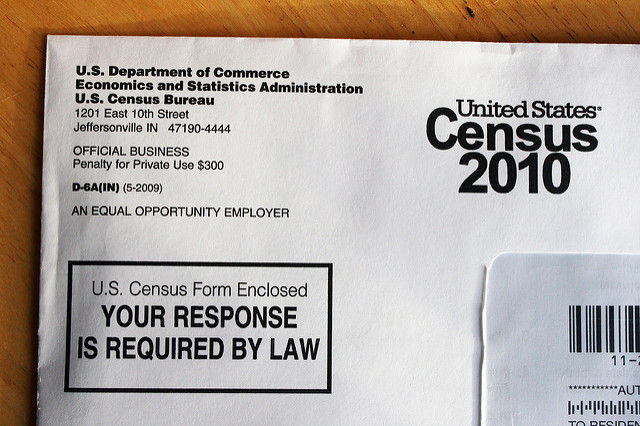
President Obama (Tim)According to USA Today, the 2010 Census will

remind Americans that racial classifications remain an integral part of the country’s social and legal fabric while, at the same time, recognizing that racial lines are blurring for a growing number of people…The government will give the nation’s more than 308 million people the opportunity to define their racial makeup as one race or more.

Some suggest that Obama’s presidency may affect how individuals report their race this time around. But how Obama himself will record his race remains a mystery.

Obama, born to a black father and a white mother, is not only the first black president but the first biracial president.

During his successful campaign in 2008, Obama referred to himself as black but also referred to his roots in Hawaii, where he was raised by his white mother. When the Obamas’ Census form arrives at 1600 Pennsylvania Ave., will he identify himself as black or as black and white? The White House declines to say.

A sociologist weighs in:

“The issue of perception is central,” says Ann Morning, a sociology professor at New York University. In an article titled “Who is Multiracial?” she estimated that about one-third of the U.S. population has some mixed-racial ancestry going back several generations. She predicts young generations will be more embracing of their multiracial heritage.

Morning is African American. But she also has English, Chinese and American Indian ancestry. Since 2000, she has checked off black, white, Asian and American Indian.

“The bigger thing is how I will mark my daughters,” Morning says. Their dad is Italian and she believes most people will look at her daughters as white. For now, she’ll check all the boxes for them, too.

Some question whether counting race is a good idea at all.

Roderick Harrison, a demographer at Howard University and the Joint Center for Political and Economic Studies in Washington. “But for a lot of others, it’s like, ‘OK, are you going to turn your back on the rest of us?’ … A lot of the racial and ethnic politics of the Census are that we want the biggest numbers possible for our groups.”

The Census has a long-lasting effect on politics and money. Population counts every 10 years decide the number of seats every state gets in the U.S. House of Representatives and determine how more than $400 billion a year in federal aid is allocated.

“I know it’s valuable information if you’re doing economic development or dispense certain amount of money to areas that need it,” says Stewart Cockburn, 39, who lost his job in textile sales in September. “My point about race in general in this country is that we’re just never going to get past it if we keep asking about it.”

Cockburn, of Greensboro, N.C., says he’s Scottish and Irish and has a great-grandmother who was Cherokee.

“I don’t understand why everyone makes such a big deal about race,” he says. “Maybe one day we will no longer care about race, ethnicity or the color of another person’s skin.”

Donna Edwards, of Santa Monica, Calif., says it’s important that the federal government allows people to identify more than one race. “It’s about time, isn’t it?” says Edwards, who is half Japanese and half German/Scottish/Welsh and spent years frustrated by forms that boxed her into one or the other.

parenting via western union

western unionAccording to the Jamaica Gleaner, University of West Indies sociologist Claudette Crawford-Brown has identified a new phenomenon: Western Union children.  She said this is replacing “barrel children” in Jamaica:

Barrel children in the past were identified as those who did not have the physical presence of their parents, but were sent goodies through shipments from overseas.  The sociologist, however, said that the barrel-children phenomenon has been surpassed by parents who give their children remittances. The difference between the two is the amount of care involved.

“You don’t have the barrel children as I highlighted seven years ago, where you had parents sending children things in a barrel. We now have what you call ‘Western Union’ children, and these are children who are parented by cellphones and they are sent the money. However, when you have a barrel child, that mother goes into K-Mart or Wal-Mart and I see them and watch them and they say: ‘I wonder if this going fit Sasha’, and she takes out the shoes with the mark out on the paper and match it with the shoes, and say this will fit her, this will fit her. You know what that shows? Some amount of care,” she said.

There are consequences of these changes in long-distance care:

Crawford-Brown pointed out even with remittances and barrels, the absence of mother in a child’s life has the same impact on youths as the absence of fathers. She noted that the absence of parental guidance leaves these children vulnerable to negative influences, where many turn to violence and drugs to cope.

According to her, many of these children who receive money through remittances are not given proper guidance, thus the money they have access to can be used to purchase drugs or facilitate their participation in illicit activities.

The noted child advocate and sociologist said many behavioural problems shown among some children are as a result of the breakdown in the family and exposure to violence. Crawford-Brown also said that Jamaica needs to tackle apathy towards murder in the society, which has trickled down to children she has worked with.

Crawford-Brown’s research on “Western Union children” was also recently featured in a column in the Jamaica Observer.