

political sociology

Tressie McMillan Cottom (Professor at the Center for Information, Technology and Public Life, University of North Carolina-Chapel Hill) appeared on an episode of The Opinions – a New York Times podcast – to discuss how Donald Trump has become America’s first “meme President.” McMillan Cottom commented on how Trump’s use of humor and embodiment of internet mediums has had his communication style politically effective: “We have really struggled with this in polite, elite discourse, where we associate humor with being a low form of communication, but humor resonates deeply with a cross section of people, and especially among younger people.”


Tressie McMillan Cottom

Martin Eiermann (Professor of Sociology at the University of Wisconsin-Madison) published a new book, The Limiting Principle: How Privacy Became a Public Issue, tracing the evolution of the concept of privacy and discussing conundrums of privacy in the digital age. Eiermann notes that “institutions that know a lot about our personal lives are able to comply with the letter of the law without offering informational privacy in a more substantive sense” and that people “suffer different consequences when their data is collected and analyzed.” This story was covered by UC Berkeley News.


Martin Eiermann

In response to the Department of Justice’s push to investigate the Open Society Foundations (philanthropies funded by the billionaire George Soros), several sociologists discussed the state of civil society in the United States:

Christopher Justin Einolf (Professor of Sociology at Northern Illinois University) wrote an article for The Conversation on the impact of civil society, ”the dense network of groups, communities, networks and ties that stand between the individual and the modern state”, on democracy. He explains that America has had a historically strong civil society, which helps account for our success of long term democracy. However, authoritarian leaders tend to crack down on or defund civil society organizations.

Dylan J. Riley (Professor of Sociology at Berkeley) was interviewed in Dissent Magazine. Riley highlighted the differences between the current period and interwar Europe, such as the size of civil society networks, the role of social media, and leader’s approaches to foreign policy.

Christopher Justin Einolf and Dylan J. Riley

Laura Hall’s (Associate Professor of Sociology at Carlton University) new book, Bloodied Bodies, Bloody Landscapes: Settler Colonialism in Horror!, examines the influence of settler colonialism on common tropes of the horror genre. “Who, and where, are Indigenous people in horror?,” Hall writes. “The answer: everywhere and nowhere at once. Both disappeared but also obsessed over, the imagined Indian is projected to reinforce settler colonialism.” This story was covered by Quill & Quire.


Laura Hall

Arthur Jipson (Associate Professor of Sociology at the University of Dayton) and Paul Becker (Associate Professor of Sociology at the University of Dayton) wrote an article for The Conversation about patterns of political violence in the United States. Although defining and measuring incidents of political violence is complex, they describe two major trends we can draw from empirical evidence. First, compared to overall violent crime, political violence is rare, but on the rise. Political violence also tends to capture media attention and amplify fear. Second, the majority of political violence stems from right-wing ideologies. This article was also cited in The Washington Post.

Arthur Jipson and Paul Becker

French sociologist Michel Wieviorka’s (Professor at École des hautes études en sciences sociales (EHESS) in Paris) new book, The Last Jewish Joke, traces the rise and decline of the “golden age” of Jewish humor in the late 20th Century. Wieviorka describes how self-deprecating humor served as a way to reaffirm Jewish community in a period of openness and declining antisemitism following World War II, and suggests that ”when interest in the intellectual heritage and cultural vitality of Yiddishkeit begins to wane, when Israel ceases to be viewed in a positive light, and when the capacity for bringing to life a Jewishness that also interests non-Jews is absent, these jokes can only appear as vestiges from the past.” This story was covered by the Jewish Telegraphic Agency.

Michel Wieviorka

Earlier this year, the Trump administration disbanded an advisory committee of experts that provided technical expertise to the U.S. Census Bureau. The committee reassembled and met this week, independently of the Census Bureau. “Will our scientific advice still find an ear at the Census Bureau? I do not know,” said Barbara Entwisle (Committee Chair and Professor of Sociology at the University of North Carolina). “However, it is a certainty that our recommendations will have no effect at all if we do not provide them.” This story was covered by the Associated Press.

Barbara Entwisle

The Kiowa County Press ran an article on political polarization in response to the shooting of Charlie Kirk. Marcus Mann (Assistant Professor of Sociology at Purdue University) commented that “outrage-based” media programming contributes to polarization: “That kind of ‘us-vs.-them’ mentality is incredibly compelling and it’s very powerful for fostering strong ‘in groups’ and making you feel part of a strong community. And we see media outlets gaining audience share through this kind of thing.” Mann noted that Republicans tend to be more homogenous than Democrats and that right-wing media “commands a way larger audience and it has features that invoke features of religion.”

Marcus Mann

The Washington Post ran a story on elected officials and other leaders cancelling in-person events due to concerns over political violence. “One of the goals of political violence is to totally transform civic culture,” Peter Simi (Professor of Sociology at Chapman University) commented. “If you’re not holding public events, you’re kind of doing the work of those who are kind of promoting political violence.”

Peter Simi

Wisconsin Public Radio interviewed Allison Daminger (Assistant Professor of Sociology at the University of Wisconsin-Madison) about her new book, What’s on Her Mind: The Mental Workload of Family Life. The book examines how partners split “cognitive labor”, or, the mental effort that goes into running a household. This includes “anticipating issues, identifying options, making decisions and monitoring the results.” While most couples in the study aimed for a 50/50 split of household labor, Daminger found that cognitive labor was typically imbalanced. Among heterosexual couples, women tend to take on more cognitive labor.

Allison Daminger

Conservative activist Charlie Kirk was shot and killed at a speaking engagement at Utah Valley University. Ruth Braunstein (Associate Professor of Sociology at John Hopkins University) appeared on WUSA9 to discuss the broader pattern of political violence in the United States. Braunstein commented that political violence has a “tremendous chilling effect on people’s willingness to go into political life, to stand up and speak out for what they believe in.” She also discussed how distrust in political institutions may lead some individuals to violence, which can further erode trust in insituions–a “vicious cycle.” Braunstein also expressed concern to the New York Times that Kirk’s murder could mobilize right-wing groups (including militia organizations): “All it will take is the slightest hint from the political leaders, including the president, but also anyone else, that this is the moment that they’re needed.”

Ruth Braunstein

Laura Garbes (Assistant Professor of Sociology at the University of Minnesota) wrote an op-ed for the Minnesota Star Tribune discussing how ‘elitism’ in public media stems from a lack of public funding. “Due to decades of budget cuts led by Republican administrations, public radio has become reliant on a set of mostly white, affluent donors for its financial survival,” Garbes explains. Programming, then, is catered to donor-listeners, leaving behind working-class audiences.

Laura Garbes

Protests are sweeping across France as a part of the Block Everything Movement–a campaign driven by anger over major cuts to public spending. The movement began online among right-wing voices, but has since been embraced by the political left. Quentin Ravelli (Sociologist at the French National Centre for Scientific Research) discussed the movement’s lack of a clear political identity in an RFI article: “Many movements avoid being labelled left or right. This isn’t just strategic: participants often feel that consensus around economic demands matter more than political allegiance. Urgent issues like public services, wages or inflation are seen as priorities.” The movement is drawing comparisons to the 2018 Yellow Vest Movement. Antoine Bristelle (Sociologist at the Jean Jaures Foundation) commented on the demographic differences to The Gazette: “In the ‘Yellow Vest’ movement, we had a rather vulnerable France that was struggling to make ends meet, a lot of workers, a lot of retirees. Whereas here, in terms of age, it’s many young people [that have] a certain vision of the world where there is more social justice, less inequality and a political system that functions differently, better,” Bristielle said.

Quentin Ravelli

A Threads post from Jennifer Walter (Swiss Sociologist and Mental Health Advocate) reacting to Trump’s flood of executive orders went viral across social media platforms. Walters argues that the Trump administration is using “shock doctrine” (“using chaos and crisis to push through radical changes while people are too disoriented to effectively resist”) to cognitively overwhelm citizens. “The result? Weakened democratic oversight and reduced public engagement,” Walter states.

Jennifer Walter

WTTW News ran a feature on Tonika Lewis Johnson (Social Justice Artist) and Maria Krysan’s (Professor of Sociology at the University of Illinois Chicago) book Don’t Go: Stories of Segregation and How to Disrupt It. The book explores how many Chicago residents have been told to stay away from the South or West side of the city and how that message reinforces segregation in the city. Johnson stated that the book aims to show the “personal” side of segregation: “It’s not just that it prevents economic investment, it hurts people’s feelings and it helps people live in fear. And we want it to offer an opportunity for people to understand how to disrupt that and how to not be offensive to people.”

Tonika Lewis Johnson and Maria Krysan

Over the past five years, Iran has faced approximately 40% annual inflation and many Iranians are struggling to make ends meet. Iranian sociologist Ardeshir Geravand warns that economic pressure may lead to social unrest in Iran. “When legitimate paths to power and wealth remain open, members of the middle class can maintain their status. However, when these avenues are blocked, it can lead to social unrest and, ultimately, revolution,” Gerevand explained. “Poverty alone does not necessarily lead to violence unless it is coupled with conditions that make living a normal, ordinary life impossible.” This story was covered by Iran International.

Ardeshir Geravand

Jamie Lee Kucinskas’s (Professor of Sociology at Hamilton College) upcoming book The Loyalty Trap: Conflicting Loyalties of Civil Servants Under Increasing Autocracy draws from interviews with individuals who were civil servants during Trump’s first term as President. “I found that those caught in loyalty traps could not both fulfill the ethical duties that came with their position and uphold the new standards of loyalty sought by the president and some appointees,” Kucinskas explained in a Public Ethics Talks interview. The book describes the moral dilemmas that civil servants faced and their strategies for managing them. This story was covered by Leiden University News.

Jamie Lee Kucinskas

  • Arlie Russell Hochschild (Professor Emerita of Sociology at the University of California, Berkeley) was interviewed in Salon, discussing how former president Donald Trump appeals to white, working class voters. “I think we live in both a material economy and a pride economy,” Hochshild explained. While Trump’s policies as president did not materially help these voters, “Trump helped those same poor and working-class white people feel proud and seen again. He talked about national pride and Making America Great Again. His voters feel that language and take it personally.”
  • The MacArthur Foundation announced its ‘Genius’ fellowship recipients for 2024, including several sociologists. Loka Ashwood’s (Assistant Professor in Sociology at the University of Kentucky) work focuses on helping communities overcome environmental injustices. Ruha Benjamin (Associate Professor of African American Studies at Princeton University) studies how technology reproduces inequalities. Dorothy Roberts (Professor of Law and Sociology at the University of Pennsylvania) examines racial inequalities within social service systems. This story was covered by the New York Times.
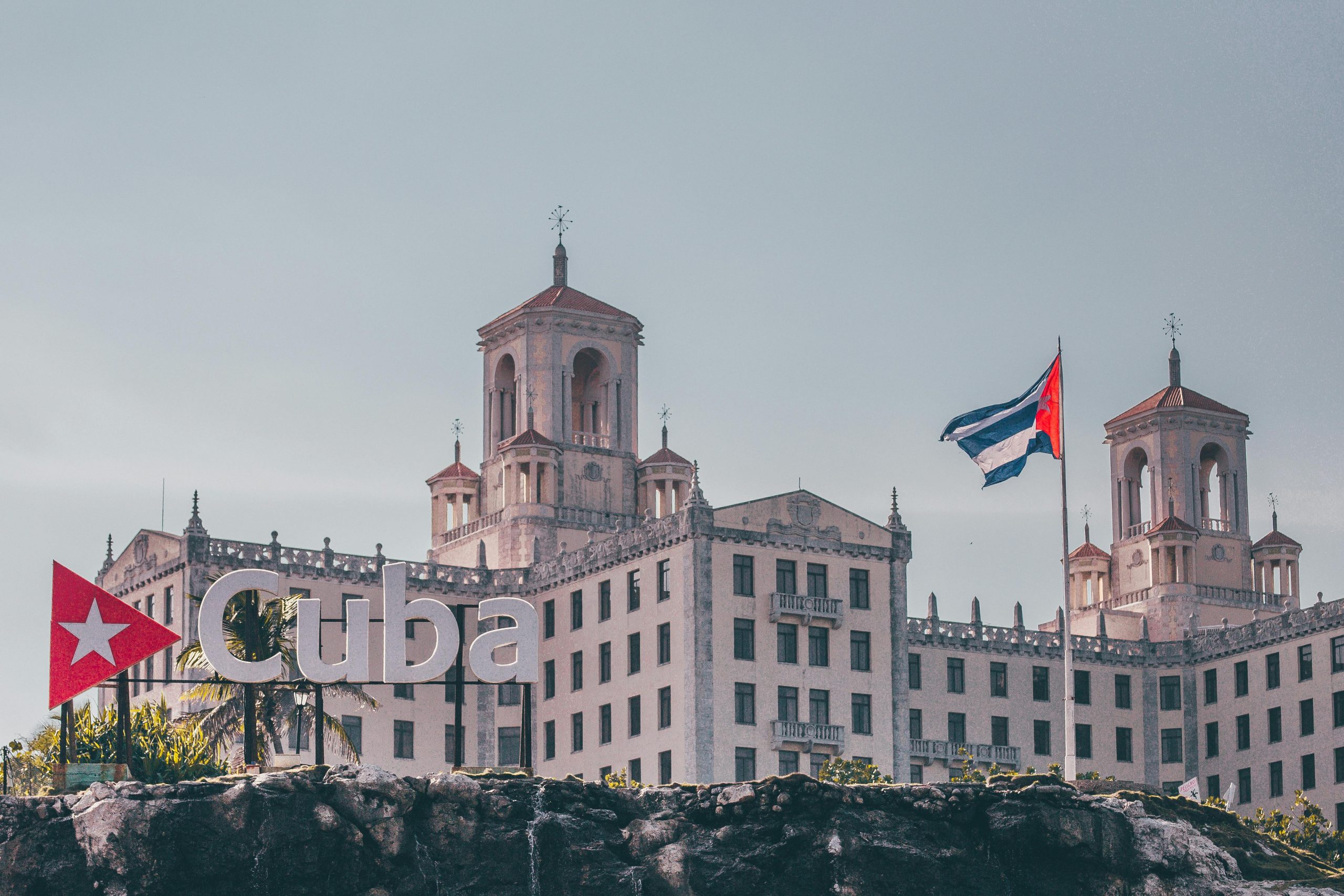
  • Diario de Cuba ran a story on the “migration crisis” in Cuba, as large numbers of Cuban people are emigrating out of the country, and the effects on children and families. Helen Ochoa Calvo (Sociologist from Cienfuegos, Cuba) commented that migration had become “the only solution left for those who can and want to live a dignified life through their work, the regime has left them with no other.” Ochoa Calvo described the current migration as the most distressing separation of parents and children since the Cuban Revolution: “Not only are parents leaving their younger children behind, they’re also leaving their older parents.”

Protest photo by the AP via Voice of America

Last week, an anti-Muslim movie produced in the U.S. influenced protests and attacks in Libya, Egypt, and several other countries. In the aftermath of the protests in Egypt, VOA spoke briefly with Said Sadek, Professor of Political Sociology at American University in Cairo.

According to Sadek, it’s important to realize that majority of people (in any religion) are not extremists but are rather caught by extremists that “try to push the silent majority into extremism, and suspicion, and intolerance.”

These extremist groups often single out media products and use them for their own messages. “There are many sites and many films and books against all religions… Why do you all of a sudden [shed] light on a particular film and ignore the others? This has to be a politically motivated process.”

Unfortunately, many members of civil society do not understand how these media products are produced.  As Sadek explains,

There is a misunderstanding in Muslim countries [about] the relationship between government and media. They still believe it’s like in autocratic regimes, the government orders the media to do this or to do that. President Obama did not order that movie about Islam is made. In fact, he is being accused in America that he is pro-Muslim.