
medical

ABC News explores some possible causes of obesity that are often overlooked.

Sure, most of the nation needs to eat less and move more. But is that the only reason America is so fat?

As more scientists and sociologists look at our bulging waistlines, some unusual explanations for the nation’s weight gain in the last 30 years are popping up.

The article discusses an intestinal bacteria that may contribute to weight gain and particular genes that may influence the success or failure of dieting.

Beyond these physical explanations, social factors may also contribute to obesity. A Harvard medical sociologist weighs in:

In 2007, an article in the New England Journal of Medicine used 30 years of data on 12,000 people to show obesity and weight loss may actually be contagious — things that spread among people who know each other.

“They key idea is that people are influenced by the behavior and actions of those around them. This applied to something that people may not have thought of, which is body size,” said Dr. Nicholas A. Christakis, author of the recent book “Connected,” which looks at how various phenomena from depression to obesity spreads through society.

Over the three decades, Christakis showed how obesity in one person in a circle of friends statistically meant more people in their circle of friends would become obese. The same was true of weight loss.

“We’re not saying we found the cause of the obesity epidemic. We’re not,” said Christakis. “Social networks have a general property that they magnify what they are seated with.”

While Christakis could show an obesity epidemic spreading through friend networks, he could only make an educated guess why.

“One possibility is that you start doing things — certain behaviors that I copy,” said Christakis.

So if one friend starts serving beer and cookies all the time, perhaps another friend will pick up the habit. Or if one friend joins a running club, perhaps another friend will join it too.

Christakis said another possibility is that “What’s spreading between people is an idea, or a norm.”

For example, if most people a person associates with are overweight, then that person’s idea of “normal weight” is likely to be bigger than what is actually healthy.
Read more.

Science Daily highlighted a longitudinal study of aging and managing illness in a Florida retirement community:

Eva Kahana, Robson Professor of Sociology and director of the Elderly Care Research Center at Case Western Reserve, reported the findings from interviews with 100 cancer survivors. These survivors are part of a longitudinal study of 1,107 elderly adults living in a retirement community.

This study calls attention to generally accepting, timid behaviors that elderly patients report about their interactions with the healthcare system while battling cancer. Nevertheless the very same older adults offer advice to other older cancer patients to take a more activist stand and become advocates in their care.

This finding of the study overturns the notion that elderly patients are disinterested and disempowered health consumers, Kahana said.

In-depth interviews about their cancer experiences revealed elderly survivors became advocates for others battling cancer, though they had taken a more passive stance – “relying on physicians and family members” – during their own struggle. So…

The researchers said the findings suggest “a transition maybe occurring from passive to a more-active or even activist orientation due to the illness experience.”

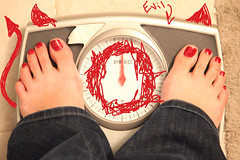
Day 167/365 - Pure EvilMany skinny Americans are fed up with obesity, reports the Los Angeles Times:

“Americans as a society are getting fed up with the matter of obesity. No doubt about it,” said Douglas Metz, chief of health services for American Specialty Health, a San Diego-based company that offers wellness programs to employers. “Some pockets of society are taking positive action, and unfortunately others are taking negative action. That’s what happens when a society hasn’t figured out what the fix is.”

Recent notable actions include:

* A recent and ultimately unsuccessful plan at Lincoln University in Pennsylvania sought to take the body mass index of every enrolling student and require the obese to lose weight or take a fitness class before they could graduate.
* In Mississippi, legislators tried to pass a bill to let restaurants prohibit obese people from dining.
* In an interview with the New York Times last August, Toby Cosgrove, chief executive of the Cleveland Clinic, one of the nation’s largest medical centers, provoked national outrage when he said that, if it were up to him, he would stop hiring the obese. He later apologized for his remarks.
* Last summer in Florida, animal rights activists at People for the Ethical Treatment of Animals (PETA) took aim at heavy women in a “Save the whales” billboard campaign that featured an overweight, bikini-clad woman. It read: “Lose the blubber. Go vegetarian.” Angry reactions caused the organization to remove the signs.

Statistics about obesity are being assessed in the current debates on how to reduce the nation’s health care costs:

A report by Emory University researchers projected last November that by 2018 the United States could expect to spend $344 billion on healthcare costs attributable to obesity. Obesity-related costs would account for 21% of healthcare spending, up from 9.1% today, said the report, sponsored in part by the United Health Foundation and the American Public Health Assn.

Providing a different take on the issue, it’s time to call in the sociologist:

“In our society, being heavy has become more of a stigma lately because we’re struggling with other issues of consumption,” says Abigail Saguy, associate professor of sociology at UCLA.

The economic climate, a recent history of people buying more than they can afford as well as environmental issues, including the depletion of our planet’s resources, are making people feel more angry about society’s overconsumption, she says. Obviously overweight people are an easy target.

“They’re almost a caricature of greed, overconsumption, overspending, over-leveraging and overusing resources,” says Saguy. “Though it’s not entirely rational, it’s an understandable reaction, especially in a country founded on the Puritan ethics of self-reliance, sacrifice and individual responsibility. If people feel they’re sacrificing, then see someone spilling over an airplane seat, they feel angry that that person is not making the same sacrifices they are.”

Research indicates that discrimination based on weight has been increasing in recent years:

Rebecca Puhl, a researcher at Yale University’s Rudd Center for Food Policy and Obesity, published [two papers] last January — one in the journal Obesity, the other in the International Journal of Obesity — Puhl reported that weight discrimination in the United States increased 66% over the prior decade.

“Weight discrimination is highly prevalent in American society and increasing,” said Puhl, who cites several possible reasons. Among them are a lack of legislation to prohibit weight discrimination and an increase in media coverage of obesity (up fivefold from 1992 to 2003). Most media framed the problem of obesity as one of personal responsibility, she reported.

New research on the social network effects of obesity was recently reported in the Guardian UK:

Children at schools where older students are obese or otherwise overweight are significantly more likely to suffer weight problems themselves, researchers report.

For each one per cent increase in the prevalence of obese students aged 16 to 18 years, the odds of a student at 14 to 16 years old attending that school also being overweight increased significantly.

“It was the one risk factor that held true across every school we looked at,” said Dr Scott Leatherdale, the chair of research at Cancer Care Ontario and lead investigator with the School Health Action, Planning and Evaluation System.

Commenting on the obesity connection between older and younger students, Leatherdale says:

It could be that younger students look up to older students, and so emulate their sedentary behaviour and bad eating habits and do not judge the older children’s body shape.  Or it could be that the school doesn’t encourage enough physical activity among its students, and the older students’ weight issues are an indication of that.

Sociologist Steve Fuller at Warwick University concurs with his assessment:

Obesity is one phenomenon that medical sociologists have nominated as an ‘epidemic’ that is transmitted by copying the behaviour of peers.  Certain connections between overeating and social activities become contagious. Young people gather together in more stationary modes than in the past: in front of computers and video games rather than sports.

The reason it’s called an ‘epidemic’ is because the pattern is reinforced by regular contact, so that if one is not in regular contact with the pattern, one doesn’t spontaneously do it The idea is that you overcome obesity by breaking up the networks where it’s transmitted.

Controversial title?Countries are looking for ways to boost organ donation, according to the New York Times. Most recently, Israel has created a policy to give priority for organ transplants to those who sign up to be organ donors themselves.

Officials hope the incentive will increase the supply of available organs — of which there is a shortage across the world, but especially in Israel, where only one in 10 adults carries a donor card.

This is sure to be a closely watched change, as most countries have tried different measures to increase willingness to donate organs. Here’s a rundown of some of those efforts, which include (1) creating markets for organs; (2) making all citizens organ donors by default, unless they explicitly exempt themselves; and (3) investing in more health care infrastructure.

Such plans have raised a few ethical eyebrows, however:

Proposals to change the organ procurement systems in the United States and Great Britain to “presumed consent” have frequently provoked ethical objections. Critics worry that such a system would effectively coerce people into donating organs, even over the wishes of the next of kin.

Ethics aside, it’s also not clear that such programs actually produce more donations.

A sociologist comments on the quandry:

Perhaps this is because — as Kieran Healy, a sociologist at Duke University has found — “opt-out” and “opt-in” systems are really not that different in practice. In both, doctors still typically defer to the wishes of the deceased’s family, whatever the official donor status of the deceased.

In a 2006 article in the DePaul Law Review, Professor Healy argued that presumed consent laws didn’t seem to be the key to improving cadaveric organ donation rates. Rather, infrastructure investments did.

Countries that experienced the biggest donation increases in recent years, like Spain and Italy, were those that hired more transplant coordinators, started public awareness campaigns, installed 24-hour organ retrieval teams at hospitals and improved training for doctors who talk to grieving families.

He concludes:

Arguments about altruism versus self-interest and disputes over presumed and informed consent together constitute a good portion of the public discussion about organ donation. Yet neither debate helps us explain why some countries have many more organ donors than others. As best we can tell, countries with high procurement rates do not owe their success to any distinctive legal conception of consent, nor to any special way of institutionalizing exchange in human goods. Rather, more fine-grained organizational differences– specifically in logistics and process management — are responsible for their success.

Girl in DespairAccording to the Washington Post, recent research on social networks has shown that loneliness can be contagious.

Although it may sound counterintuitive, loneliness can spread from one person to another, according to research being released Tuesday that underscores the power of one person’s emotions to affect friends, family and neighbors.

The federally funded analysis of data collected from more than 4,000 people over 10 years found that lonely people increase the chances that someone they know will start to feel alone, and that the solitary feeling can spread one more degree of separation, causing a friend of a friend or even the sibling of a friend to feel desolate.

Further…

The researchers used information gathered from the participants over decades, including their friendships, identities of their neighbors, co-workers and family members, and information about their emotional state. Previous studies by Christakis and Fowler concluded that obesity, the likelihood of quitting smoking, and even happiness could spread from one person to another.

Similarly, the new analysis, involving 4,793 people who were interviewed every two years between 1991 and 2001, showed that having a social connection to a lonely person increased the chances of developing feelings of loneliness. A friend of a lonely person was 52 percent more likely to develop feelings of loneliness by the time of the next interview, the analysis showed. A friend of that person was 25 percent more likely, and a friend of a friend of a friend was 15 percent more likely.

According to sociologists, these results demonstrate that even individuals’ emotions have social significance:

“No man is an island,” said Nicholas A. Christakis, a professor of medicine and medical sociology at Harvard Medical School who helped conduct the research. “Something so personal as a person’s emotions can have a collective existence and affect the vast fabric of humanity.”

And…

The researchers said the effect could not be the result of lonely people being more likely to associate with other lonely people because they showed the effect over time. “It’s not a birds-of-a-feather-flock-together effect,” Christakis said.

The findings underscore the importance of social networks, several experts said.

“For years, physicians and researchers thought about individuals as isolated creatures,” said Stanley Wasserman, who studies social networks at Indiana University. “We now know that the people you surround yourself with can have a tremendous impact on your well-being, whether it’s physical or psychological.”

The findings suggest that if you help “the people on the margins of the network, you help not only them but help stabilize the whole network ,” Christakis said.

In an article entitled, “First Blood: Introducing Menstrual Activism,” Salon.com explores the ‘negative cultural stance toward menstruation’ and what is being done to counter it.

The background, from Salon.com:

Every woman has one. Not what you’re thinking — that too, yes, but I am referring to a menstruation horror story. A bright blood stain blooming on the back of white jeans, a first period that has the audacity to arrive during gym class or one that colors a yellow swimsuit red while you are waterskiing with your grandfather, as happened to Rachel Kauder Nalebuff, the editor of “My Little Red Book.”… But does the embarrassment many women feel arise from a negative cultural stance toward menstruation? And do we need a concerted effort to address it?

In an article published in the Guardian on Friday, writer Kira Cochrane situates “My Little Red Book” at the center of a new wave, as it were, of “menstrual activism.” (The movement is also called “radical menstruation,” “menstrual anarchy” or “menarchy.”) The term, she writes, “is used to describe a whole range of actions,” such as “simple efforts to speak openly about periods, radical affronts to negative attitudes, and campaigns for more environmentally friendly sanitary products,” since a woman could create her own personal landfill with the 11,400 tampons she uses in her lifetime. (What I want to know is: Who counted?)

The sociological commentary:

Chris Bobel, a women’s studies professor at the University of Massachusetts Boston and the author of an upcoming book, “New Blood: Third Wave Feminism and the Politics of Menstruation,” explains that many “menstrual activists begin by thinking, wait a minute! Do we have to regard our period as something dirty? Do we have to greet a girl’s first period with silence?” According to Cochrane, these women are attempting to take “the shame out of periods,” to overcome the supposed “menstrual taboo.”

But are significant changes really happening?

But the greatest indicator that the cultural attitude toward menstruation has shifted may be the ads for “feminine products.” Ads have ceased to be so euphemistic you have no idea what product is being peddled (“Be free and active!”). The latest from Tampax are hilariously direct in their wink-wink indirectness. Mother Nature (played by Catherine Lloyd Burns) offers a “monthly gift” — a box wrapped in red paper, a symbol obvious enough to please teenage boys and dissertation writers alike — to various women (in one ad, it’s Serena Williams) at inopportune moments. When primetime viewers are savvy enough about menstruation to get in-jokes about periods and blood, it’s a safe bet that the stigma has eased.

Those who prefer to remain quiet about the subject may not be evincing gynophobia so much as conversational etiquette. It may be an act of modesty, not of shame. People don’t much discuss erectile dysfunction or bowel problems either, and not for reasons of gender, or because those bodily processes are particularly taboo. When menstruation is a relevant subject between people — girlfriends and boyfriends, husbands and wives, female friends — it’s not generally treated as humiliating or distasteful. And indeed, women don’t seem to feel much fear about talking about it. Case in point: “My Little Red Book,” for which 90-odd female writers agreed to share their stories.

Read more.

A recent story in the Metro News (Vancouver, Canada) caught my attention…

A group that tells people how to kill themselves has been barred from presenting at Vancouver’s public library over concerns that the library could be held liable for helping people to commit suicide.

Paul Whitney, the city’s librarian, said he cancelled the booking — which tells people how to kill themselves, what drug to buy and where to buy it — after legal and law enforcement advisers told him it would violate the Criminal Code.

Whitney said it was inappropriate for the publicly funded library to be putting itself in that position of “undo risk.”

About the group:

But Dr. Philip Nitschke, director of the Australian right-to-die group Exit International, said the group does not encourage people to commit suicide, but rather it gives them end-of-life information to better consider their options.

“This is an issue of vital importance to elderly Canadians … The library is a place where one would expect the free impartation and discussion of ideas and information,” said Nitschke, via an Internet video link from Australia yesterday.

The sociological perspective…

Russel Ogden, a criminologist at Kwantlen Polytechnic University who has studied assisted suicide in Canada for the past 20 years, said talking about suicide is not an offence.

There is evidence, he added, that discussing suicide can even act as a deterrent.

Read more.

usedThe San Francisco Chronicle ran a story earlier this week about a recent recommendation by the NCAA to screen college athletes for the gene that can cause sickle cell disease. This has resulted in a significant amount of heated debate including testimony from experts who claim the testing is unnecessary and highlight the possibility of unintended discrimination against minority athletes.

About the issue:

Sickle cell disease is a blood disorder that can cause severe pain, stroke and death, but sickle cell trait is almost always benign, and many people never know whether they carry the gene. About 8 percent of black people and about 1 percent of Latinos have sickle cell trait, but it’s rare among white people, affecting only about 1 in 10,000.

Several high-profile cases of athletes dying during extreme workouts have led some researchers to believe that sickle cell trait can be fatal. The case with the most impact was the 2006 death of 19-year-old Dale Lloyd II, a Rice University football player who had sickle cell trait and collapsed after a physically intense practice.

Lloyd’s family filed suit, saying the university should have tested the young man. As part of a settlement, the NCAA made its recommendation to screen athletes, which was announced in June.

A medical opinion:

But sickle cell experts, including at Children’s Hospital Oakland, say the action is misguided. There is little science to back up the assumption that sickle cell trait causes death, they say, and screening players could do more harm than good for black and other minority athletes. “A coach is going to be able to say, ‘Even though this kid is great, do I really want to put him out there as the quarterback or starting player and take the risk of something happening?’ ” said Dr. Elliott Vichinsky, a sickle cell expert and director of hematology and oncology at Children’s Hospital Oakland.

And a sociological opinion:

The United States has a long history of discrimination against people with sickle cell trait, said Troy Duster, a sociologist at UC Berkeley and New York University. In the 1960s, people who tested positive weren’t allowed into the Air Force Academy, and into the ’70s people were denied insurance or certain jobs, he said.

It’s irresponsible to screen people when there’s little scientific evidence that the gene causes death and no specific precautions athletes can take to protect themselves, Duster said.

“When you screen someone, the question is, for what? What are you going to do with that information?” Duster said. “The NCAA is saying they want education, but education requires research, and there’s no research.”

Read more.

DSC_1406Earlier this week Reuters Health ran a story about a new study suggesting that “people who get married and stay married may enjoy better health than the perpetually single, but losing a spouse could take a significant health toll…”

In the new study, researchers found that middle-aged and older Americans who were currently married tended to give higher ratings to their health than their never-married counterparts. They also reported fewer depression symptoms and limits on their mobility.

On the other hand, divorced or widowed adults fared worse than the never married on certain health measures — including the number of chronic health conditions reported. “Previously married people experience, on average, 20 percent more conditions and 23 percent more limitations,” the researchers write in the Journal of Health and Social Behavior.

Remarriage seemed to lessen some of the health effects of divorce or widowhood. However, remarried men and women were still in generally poorer health than those in a lasting marriage.

Sociologist Linda J. Waite of the University of Chicago co-authored the report:

“We argue that losing a marriage through divorce or widowhood is extremely stressful and that a high-stress period takes a toll on health,” researcher Linda J. Waite, a professor of sociology at the University of Chicago, said in a written statement.

“Think of health as money in the bank,” she added. “Think of a marriage as a mechanism for ‘saving’ or adding to health. Think of divorce as a period of very high expenditures.”

Read more.