
Tag Archives: medical

Crazy Cat Lady

Felix the cat

Could the President of the United States be a vegetarian?  According to Vanderbilt Professor of Philosophy Kelly Oliver, it’s not likely.   In her recent New York Times Op-Ed, Oliver explained,

In the United States, we often see our political leaders hunting, particularly bird-hunting, which seems to demonstrate their manly fortitude and bloodlust — qualities intended to persuade us that they can keep us safe.  Hunting has become a tool of sorts within the realm of political image making.  With few exceptions, President Obama among them, most presidents and presidential hopefuls have been seen hunting.  Meat eating, too, is an act used to portray strength.  Obama is known to enjoy his burgers, a fact that has helped counter his image as a green-tea drinking elitist.  Even Sarah Palin’s so-called new brand of feminism revolves around the image of a tough “mama grizzly,” as she calls herself, shooting and gutting moose to feed and protect her family.

Yet while hunters are often seen as tough providers, animal lovers are infantilized.

In popular culture, celebrities who take on animal causes are seen as a bit crazy — rich versions of the “crazy cat lady,” or dog-crazy Leona Helmsley. Not coincidentally, they are usually women.  And, our relationships to the animals with whom (or rather which, to be grammatically correct) we live is given very little status in our society.  Despite the proliferation of  “cute” pet pictures and anecdotes on the Web, actual displays of affection toward one’s pet or companion animal, or grief expressed over their illness or death, is looked upon with ridicule.

What more, people who are dependent on their animals are seen as unhealthy.  In fact, this is reflected in laws surrounding guide dogs, comfort dogs used to provide emotional support to children testifying in court, and other forms of animal service.

The regulations are very clear: these animals are not pets.  They are “serving” an essential therapeutic purpose.  The fact that these relationships are circumscribed by laws relegate animals to the role of tools or medication, an act that also pathologizes the people who rely on them.  Animals, then, can enter our intimate family units only as pets, which is to say property, or as a result of trauma, disease or disability.  This cultural attitude suggests that people who are dependent upon their animals for anything other than amusement or entertainment are abnormal or unhealthy.  Loving animals as friends and family is seen as quirky at best and at worst, crazy.


To read more about Oliver’s specific reflections on animals and philosophy, click here
.


Leveling Women’s Bodies to Level the Playing Field

If anything positive came from the debacle that surrounded the International Association of Athletics
Federation’s attempts to ‘determine’ South African runner Caster Semenya’s sex, it is that it brought to light the crude methods that were being used to enforce the male/female binary in sports (See David Zirin and Sherry Wolf’s article in the Nation for critical coverage of the initial controversy).

Two years later the International Olympic Committee and the International Association of Athletics Federation, the governing body for track and field, have released a new policy to regulate athletes whose sex development is considered unusual to avoid a repeat of the nightmare that Semenya faced.

In a recent editorial in the The New York Times, Alice Dreger, professor of clinical medical humanities and bioethics at the Feinberg School of Medicine at Northwestern University, provides a critical read of the new policy. Dreger explains that initially the policy seems like an improvement because:

The new policy no longer allows any room for a simplistic “I know it when I see it” approach to who counts as a female athlete.

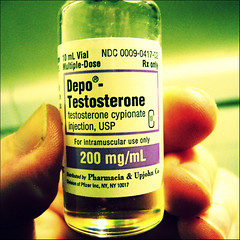
The new system relies on setting the ‘appropriate’ levels of functional testosterone a female athlete should have. However, as Dregger argues, this policy is fundamentally sexist. Both men and women naturally produce testosterone.

Yet despite the fact that testosterone belongs to women, too, the I.O.C. and the I.A.A.F. are basically saying it is really a manly thing: “You can have functional testosterone, but if you make too much, you’re out of the game because you’re not a real woman.”

Dregger explains that men are free of any equivalent biochemical policing and can take full advantage of any ‘mutation’ that gives him an advantage. In efforts to create ‘the mythical level playing field’ the committee has taken another step in a now rich history of controlling and categorizing women’s bodies. For women athletes who have more functional testosterone than is considered appropriate for a female the only option is to “submit to being made sexually ‘normal’ through hormone treatments” or they cannot compete.

While Dregger is sympathetic to the difficulties that I.O.C. and I.A.A.F. face, she finds little progress in the decision

this newly proposed biological reduction of women to a hormonally disadvantaged class of people — one medically made disadvantaged, if necessary — struck many of us as regressive from the standpoint of women’s rights. Indeed, it reminds me of those itty-bitty shorts that college women’s volleyball players must wear. They each sexualize the bodies of female athletes as a requirement of play. They each insist that a woman never be manly.

Perhaps the biggest take away point from Dregger’s article and the debates surrounding how to define and separate male from female in the sporting arena is that:

There is no perfect solution, one that is reasonably objective, universally applicable and universally satisfying.


Creating Children

Duck DNA N°2

Last fall, 27-year-old Ohad Ben-Yaakov was injured in an accident at his part-time job, and he died after two weeks in a coma. Ben-Yaakov wasn’t married, nor was he in a relationship. No woman was pregnant with his child. Nevertheless, his devastated parents believe it’s not too late for them to become the grandparents of his offspring. And because they live in Israel, the world capital of in-vitro fertilization and a country that regularly pushes the envelope on reproductive technologies, they might get their wish.

No, this isn’t science fiction.  It’s reality in Israeli, and  Tablet recently explored an Israeli court’s consideration of whether parents have the right to use their dead son’s frozen sperm to create a grandchild.

It’s not surprising that Israel, a society that is at once rooted in ancient faith and deeply invested in cutting-edge technology, has pioneered futuristic forms of procreation. The biblical emphasis on fruitfulness, when compounded by the legacy of the Holocaust and the demographic issues shaping the Middle East, have made Israeli society and public policy exceptionally pro-natalist. The country is aggressive in pushing the boundaries of reproductive technology.

Some scholars worry about how these boundaries are being pushed, though.

“It used to be, God forbid you were infertile, it was sad and terrible and tragic, but you came to terms with it,” says Susan Martha Kahn, a Harvard anthropologist and author of Reproducing Jews: A Cultural Account of Assisted Conception in Israel. “Now you can never come to terms with it. There’s no resolution. Some of these women go through round after round, 12, 15 rounds of IVF, and it doesn’t work. That is the eclipse of an entire young life spent trying to get pregnant.

Vardit Ravitsky, a professor in the Bioethics Programs at the Université de Montréal Faculty of Medicine, adds:

“Where we are with reproductive technologies is a result of the fact that we have refused to accept infertility as a fact . . . Today, the idea that I have a right to have a genetic child is much more accepted than in the past. To extend that one generation to genetic grandchildren maybe is not that farfetched.”

As the author of the article thoughtfully asks, when should a tragedy be accepted rather than combated with technology? Who gets to decide?  For more questions and discussion, see the full article.


Sociology of Pink

Two weeks into Breast Cancer Awareness Month, the pink ribbons have been fluttering in full force. A New York Times blog urges a little reflection on the meaning of this now ubiquitous phenomenon:

The pink ribbon has been a spectacular success in terms of bringing recognition and funding to the breast cancer cause. But now there is a growing impatience about what some critics have termed “pink ribbon culture.” Medical sociologist Gayle A. Sulik, author of the new book “Pink Ribbon Blues: How Breast Cancer Culture Undermines Women’s Health” (Oxford University Press), calls it “the rise of pink October.”

“Pink ribbon paraphernalia saturate shopping malls, billboards, magazines, television and other entertainment venues,” she writes on her Web site. “The pervasiveness of the pink ribbon campaign leads many people to believe that the fight against breast cancer is progressing, when in truth it’s barely begun.”

The campaign builds on a long history of breast cancer activism, beginning in the 1970s, and now represents mainstream recognition of the cause.

So how can the pink ribbon be objectionable? Among the first salvos against the pink ribbon was a 2001 article in Harper’s magazine entitled “Welcome to Cancerland,” written by the well-known feminist author Barbara Ehrenreich. Herself a breast cancer patient, Ms. Ehrenreich delivered a scathing attack on the kitsch and sentimentality that she believed pervaded breast cancer activism.

A few additional critiques:

In “Pink Ribbon Blues,” Ms. Sulik offers three main objections to the pink ribbon. First, she worries that pink ribbon campaigns impose a model of optimism and uplift on women with breast cancer, although many such women actually feel cynicism, anger and similar emotions.

And like Ms. Ehrenreich, Ms. Sulik worries that the color pink reinforces stereotypical notions of gender — for example, that recovery from breast cancer necessarily entails having breast reconstruction, wearing makeup and “restoring the feminine body.”

Finally, Ms. Sulik closely examines what she calls the “financial incentives that keep the war on breast cancer profitable.” She reports that the Susan G. Komen Foundation, which annually sponsors over 125 annual Races for the Cure and more than a dozen three-day, 60-mile walks, has close to 200 corporate partners, including many drug companies. These associations, she warns, are a potential conflict of interest.

Read the rest.

Is the Pain Worth the Gain?

NO PAIN, NO GAIN

In a recent thought piece titled, “Racing Safely to the Finish Line? Kids, Competitions, and Injuries,” Sociologist Hilary Levey, reflects upon the reaction to the recent death of thirteen-year-old Peter Lenz this past Sunday. Peter was killed in a motorcycle accident at the Indianapolis Motor Speedway during a practice session.

Levey explains that it would be an error for the public to be caught up in the type of accident that occurred and we should instead use this tragedy as an impetus to consider the dangers of increasingly competitive youth sport.

Youth racing shouldn’t be alone in getting a closer inspection. This tragedy could have happened to any girl on a balance beam or any boy in a football tackle last Sunday. We should not be distracted by the fact that Peter was in a motorcycle race.

Despite the risk of serious injuries, like concussions, and even death, millions of kids compete in almost any activity you can imagine. Did you know that there are shooting contests for young Davy Crocketts, a racing circuit for aspiring Danica Patricks, and a youth PGA for those pursuing Tiger Woods’ swing? When did American childhood become not just hyper-organized but also hyper-competitive?

Levey shows that youth sport should be examined as the culmination of a century long trajectory of increased competitiveness.

Initially the organized activities served as a way mitigate deviant behavior by reducing the amount of unmonitored idle hours.

In 1903 New York City’s Public School Athletic League for Boys was established and contests between children, organized by adults, emerged as a way to keep the boys coming back to activities and clubs. Settlement houses and ethnic clubs followed suit and the number of these clubs grew rapidly through the 1920s.

However, the level of competitiveness continued to ramp up as the 20th century progressed. National organizations were introduced after World War II and the by the 1970s, for-profit organizations were common.

And, by the turn of the twenty-first century, a variety of year-round competitive circuits, run by paid organizers and coaches, dominated families’ evenings and weekends.

Parents tried to find the activity best suited to turn their children into national champions, even at age seven. As competitive children’s activities became increasingly organized over the twentieth century, injuries increased — especially overuse injuries and concussions. More practice time, an earlier focus on only one sport, and a higher level of intensity in games create the environment for these types of injuries.

Peter Lenz’s death is indicative of an increasingly competitive and organized American childhood. Levey argues that as a society we have the responsibility to make sure the training and safety regulations keep up with the increased pressure and risk of injury. This should include greater monitoring of safety equipment and higher standards for coaches.

While catastrophic accidents like Peter Lenz’s will happen, we can work to better protect all competitive children from more common injuries like concussions and overuse injuries. Kids want to win whatever race they are in and be the champion. Adults should make sure they all safely cross the finish line.

An Obesity Obsession

20100804_MissionDistrict_004
Here in the U.S., we are obsessed with weight.  It’s hard to even go one day without seeing an advertisement for the latest diet or a news story about a celebrity who shed some pounds or put on a few too many.  While this obsession is due in part to our focus on physical appearance, many of us link obesity with poor health outcomes, including death.  However, a recent social epidemiological study highlighted in Miller-McCune examined the factors that lead to early death; and obesity did not make the list.  Instead, those eager to prevent early death should avoid cigarettes, sedentary lifestyles, and even living in poverty.

This does not mean the lead author of the aforementioned study, Paula Lantz, is proposing we all relax and pig out. The University of Michigan social epidemiologist fully recognizes obesity as a national health problem. But her research suggests our current focus on weight is a bit (ahem) narrow and at least somewhat misleading.

Instead, we should look to what causes and exacerbates obesity, such as sugary sodas and our reliance on cars. And, while personal choices factor in, social class also plays a role.

It’s hard to take personal responsibility if you don’t have the money to join a gym and you have no access to healthy food in your immediate neighborhood. The place where you can get the most calories for the least money is McDonald’s. Their food is dirt cheap on a per-calorie basis.

In other words, being poor is hazardous to your health.

Stress processes probably play a role. Chronic stress is not good for immune function. [Difficulties with] housing, transportation, income security — all those factors can produce stress.  Do you have friends and family — people who can actually help you get to the doctor? Is your community organized in such a way that it provides the resources you need?

So, while a focus on obesity is important, we should start focusing on less prominent culprits like poverty.  And, in the meantime, exercise!

When Is It OK To Be Sad?

Pills 2
No one wants to be sad. This can generally be agreed on. However, as it becomes more and more common for anti-depressants and anti-anxiety medications to be prescribed, the question becomes what is a socially acceptable level of sadness for a well-functioning member of society to experience? There remains a blurry, but important line between what is considered ‘normal’ grieving and what is classified as a mental disorder or depression.  NPR’s Alix Spiegal recently explored a shift in this line due to changes in the criteria used by the American Psychiatric Association to diagnose depression.

Traditionally, the manual has steered doctors away from diagnosing major depression in people who have just lost a loved one in what’s called “bereavement exclusion.” The idea was that feelings of intense pain were normal, so they shouldn’t be labeled as a mental disorder.
But the new DSM changes this. Buried in the pages is a small but potentially potent alteration that has implications not only for people like Theresa, but ultimately for the way that we think about and understand the emotion of pain.
The DSM committee removed the bereavement exclusion — a small, almost footnote at the bottom of the section that describes the symptoms of major depression — from the manual.

Dr. Kenneth Kendler, a member of the committee behind the change, explains that grief and depression share the same symptoms – lack of sleep, loss of appetite, loss of energy. The key distinction between grief and depression is the amount of time the person experiences the symptoms.

In fact, in the new manual, if symptoms like these persist for more than two weeks, the bereaved person will be considered to have a mental disorder: major depression. And treatment, either therapy or medication, is recommended.

While Kendler believes that this change will only affect a small number, and for the better, Holly Prigerson a research at Harvard University believes otherwise.

“What we found,” Prigerson says, “is that when you follow people — for example, between zero and six months post-loss — their depression symptom levels actually increase over time and peak at about six months post-loss.”
Because grief and depression look so much alike, Prigerson says, she worries that people who are suffering from normal grief will be told that they are sick when they are not, and encouraged to treat their symptoms when they don’t need to.
That is potentially a problem, Prigerson says, because we don’t know whether the pain of normal grief actually helps people to process their loss.

Other experts expand Prigerson’s argument by voicing concern that society is continuing down a path to having an over-diagnosed and over-medicated population where to be sad is to be sick.

Dr. Allen Frances, the famous psychiatrist and a former editor of the DSM, says that more and more, psychiatry is medicalizing our experiences. That is, it is turning emotions that are perfectly normal into something pathological.
“Over the course of time, we’ve become looser in applying the term ‘mental disorder’ to the expectable aches and pains and sufferings of everyday life,” Frances says. “And always, we think about a medication treatment for each and every problem.”
From Frances’ perspective, if you can’t feel intense emotional pain in the wake of the death of your child without it being categorized as a mental disorder, then when in the course of human experience are you allowed to feel intense emotional pain for more than two weeks?

july effect

IMG_8196
USA Today reports on a recent study  that provides evidence for a “July effect” when it comes to medical mistakes.

The so-called July effect has long been suspected. It’s based on the fact that new U.S. doctors start their residencies (in-hospital training) each July 1 in thousands of “teaching hospitals” nationwide. But until recently, the idea that hospitals are especially dangerous in July was little studied.

Other studies have found no such effect when it comes to major surgical mistakes, but this new study hones in on another area of concern:

“It looks like medication error is the place to worry” about a July effect, says David Phillips, a sociologist at the University of California-San Diego. He reviewed 62 million deaths between 1979 and 2006 and focused on 244,388 fatal drug errors. The study found no spike in such deaths outside of hospitals or in counties without teaching hospitals.

And, Phillips says, he found no sign such deaths were decreasing amid rising concerns about patient safety and residents’ long work hours (which were cut in 2003). More study is needed, he says, to see if non-fatal drug errors also rise in July.

Phillips was also interviewed on NPR and discussed some potential contributors to the July effect. In addition to being inexperienced and overtired, medical residents may make more mistakes because they tend to work alone. Phillips contrasts this with surgical residents who, although also tired and inexperienced, tend to work in teams.  This factor may help prevent a similar spike in surgical errors during July.

weighting for health care?

Littmann
USA Today reports on a new study examining whether people who are overweight receive less care from their doctors.

Previous research has shown that some physicians find it awkward to work with obese patients and have low expectations for success. And heavy patients have reported feeling that doctors are biased and disrespectful because of their extra weight. To examine whether such attitudes translate into differences in actual practice, researchers at the University of Pennsylvania School of Medicine and the Philadelphia Veterans Affairs Medical Center evaluated the medical care of nearly 70,000 patients. They were Medicare beneficiaries or received care from Veterans Affairs (VA) hospitals.

The scientists compared how likely heavy and normal-weight people were to meet standard guidelines for preventive care, including diabetes care (eye exams, sugar and cholesterol testing), flu vaccines, pneumonia vaccines and screenings for breast, colorectal and cervical cancers.

Results showed that people in the study who were overweight or obese were just as, if not more, likely to receive preventative care from their doctors as people of normal weight.

The study’s lead investigator, who holds an MD and a PhD in sociology, comments:

“Physicians appear to be doing a good job at preventive care, despite surveys suggesting that physicians have negative attitudes toward obesity and patients’ perceptions that their doctors are biased,” says lead author Virginia Chang, an assistant professor of medicine and sociology at the University of Pennsylvania…

“It’s important to ensure that obese patients are getting equitable preventive care, as these services can save lives and reduce costs down the road,” Chang says.

Still, questions remain. “Our findings do not address patients’ satisfaction with their care,” she says. “And these findings may not be true of younger populations where the stigma of obesity may be greater.”

do friends make you fat?

ABC News explores some possible causes of obesity that are often overlooked.

Sure, most of the nation needs to eat less and move more. But is that the only reason America is so fat?

As more scientists and sociologists look at our bulging waistlines, some unusual explanations for the nation’s weight gain in the last 30 years are popping up.

The article discusses an intestinal bacteria that may contribute to weight gain and particular genes that may influence the success or failure of dieting.

Beyond these physical explanations, social factors may also contribute to obesity. A Harvard medical sociologist weighs in:

In 2007, an article in the New England Journal of Medicine used 30 years of data on 12,000 people to show obesity and weight loss may actually be contagious — things that spread among people who know each other.

“They key idea is that people are influenced by the behavior and actions of those around them. This applied to something that people may not have thought of, which is body size,” said Dr. Nicholas A. Christakis, author of the recent book “Connected,” which looks at how various phenomena from depression to obesity spreads through society.

Over the three decades, Christakis showed how obesity in one person in a circle of friends statistically meant more people in their circle of friends would become obese. The same was true of weight loss.

“We’re not saying we found the cause of the obesity epidemic. We’re not,” said Christakis. “Social networks have a general property that they magnify what they are seated with.”

While Christakis could show an obesity epidemic spreading through friend networks, he could only make an educated guess why.

“One possibility is that you start doing things — certain behaviors that I copy,” said Christakis.

So if one friend starts serving beer and cookies all the time, perhaps another friend will pick up the habit. Or if one friend joins a running club, perhaps another friend will join it too.

Christakis said another possibility is that “What’s spreading between people is an idea, or a norm.”

For example, if most people a person associates with are overweight, then that person’s idea of “normal weight” is likely to be bigger than what is actually healthy.

Read more.