
Jim Crow

Photo by ShironekoEuro, Flickr CC

Among America’s history of race and racism, one particularly ugly violent memory is the practice of lynching in the late 19th and early 20th centuries. White mobs would often capture and kill Black men on false accusations as part of a system of racial domination and oppression. While lynching is often cast as a distinctly Southern problem, a recent article in The New York Times by sociologist Charles Seguin discusses how newspaper coverage in both the South and the North used racist language and symbolism when reporting on lynching incidents.

Seguin argues that work by activists — including sociologist Ida B. Wells and especially newspaper coverage on American lynchings around the globe — led to international embarrassment for the United States, questioning America’s image as an advanced nation and model democracy. With this increased scrutiny in the international spotlight, many Northern newspapers became more critical of lynchings, framing it is a shameful part of the South. As he describes,

What these outside agitators — Wells, the British press and the Italian Embassy — accomplished was to embarrass the Northern newspapers, which eventually denounced lynching communities as barbarous and anarchic with headlines like “More Southern Savagery.”

Seguin’s article provides a rich discussion of how the intersections of racism, region, and press shaped the history of newspaper coverage surrounding lynching in the United States. Though Southern newspapers such as the Montgomery Advertiser have made public apologies for their role in racist coverage regarding lynchings, it is important to remember that this issue was not just confined to the South.
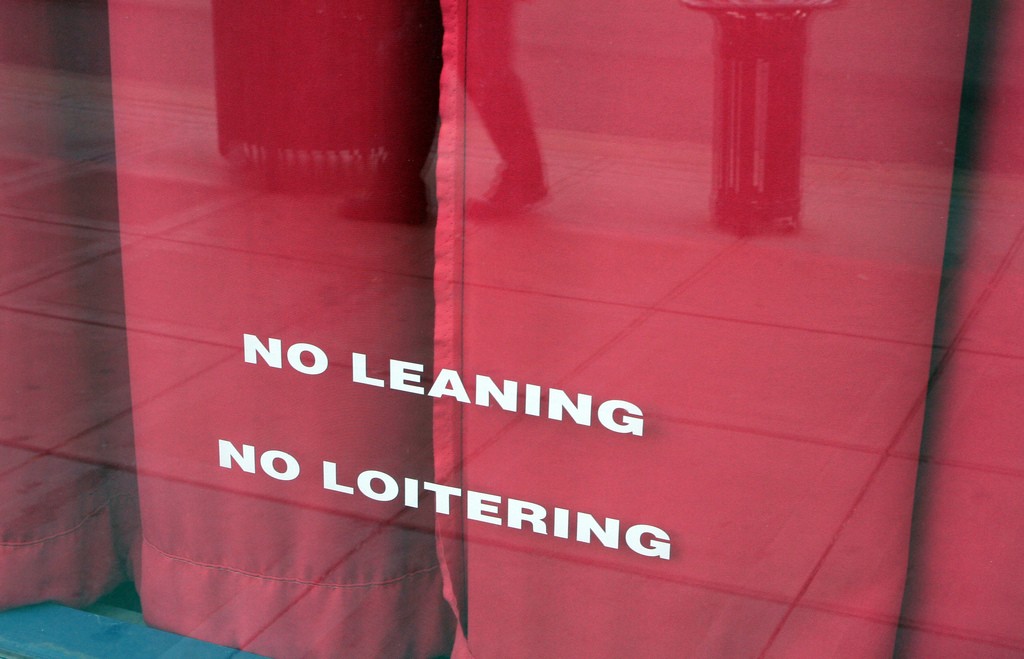
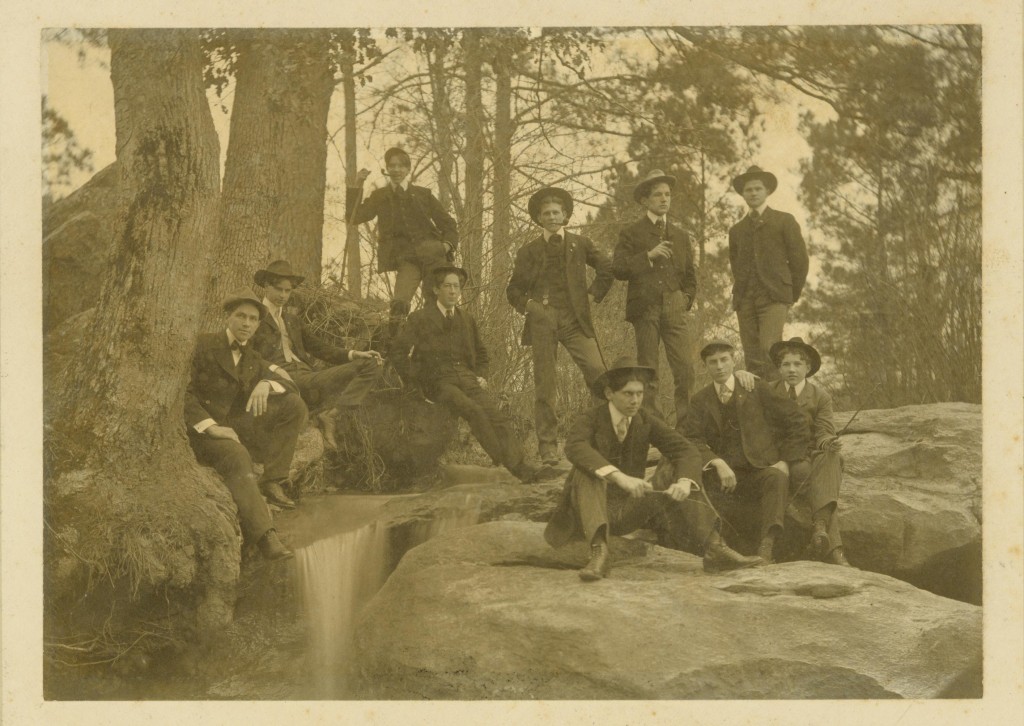
Photo by Sharon Mollerus via Flickr CC.
Minneapolis photo by Sharon Mollerus via Flickr CC.


Sociologist Nancy Heitzeg collaborated with community consultant William W. Smith IV for a piece in the Star Tribune about the racial policing of low-level crimes in Minneapolis. African Americans, they write, have experienced disproportionately high arrests for minor offenses such as loitering, spitting, lurking, depositing tobacco, congregating on the street or sidewalk, and violating juvenile curfews. A black person in Minneapolis is 7.54 times more likely to be arrested for vagrancy than a white person, and black youth are 16.39 times more likely than their white peers to be arrested for loitering or breaking curfew. It’s unlikely that African Americans commit more of these crimes, Heitzeg and Smith write; instead, racial profiling and the policing specific neighborhoods are bigger drivers of the disparity.

Some question whether more arrests for low-level offenses actually matter in the grand scheme of things. Community organizations including Black Lives Matter Minneapolis, the Coalition for Critical Change, and Community Justice Projects have initiated petitions charging that many of these ordinances are vague and unconstitutional. Additionally, according to Heitzeg and Smith “The overpolicing of our communities of color contributes to unequitable outcomes in multiple social arenas, including education and employment.” Even having been arrested for a minor violation can negatively affect college admissions or getting a job.

Heitzeg and Smith highlight the history of racialized policing and the withholding of civil rights in the detainment of African Americans. They connect low-level offenses to the post-abolition Slave Codes transformation into Black Codes that circumscribed the lives of African Americans in the Jim Crow era. As the authors put it, “Low-level and ‘livability’ crimes were central features of the old Jim Crow era, and remain today—in the New Jim Crow era—as pretextual police tools in racial profiling.”

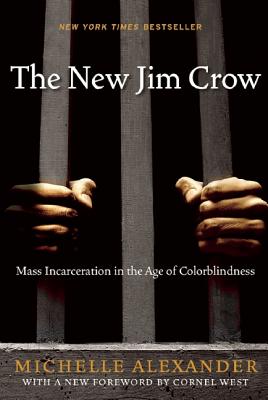
To listen to a TSP Office Hours interview with the author of The New Jim Crow, Michelle Alexander, click here. Our book Crime and the Punished includes an excerpt from the interview.

The men of Sigma Alpha Epsilon, Emory University archives.


A revoked charter. Public condemnation by a University president. A pair of expulsions. The reactions to the now-infamous video of members of fraternity Sigma Alpha Epsilon singing “There will never be a n*gger in SAE” have been swift and damning. Despite the public shock, though, this isn’t an isolated—or new—phenomenon. Such issues are reflective of the broader nature and roots of Greek life at colleges and universities across the southern United States, explains the Washington Post with help from work by UConn sociologist Matthew Hughey.

SAE, for example, was founded over 100 years ago in the Antebellum South. During the Civil War, 369 of its 400 members fought for the Confederacy. And along with the most recent incident, SAE chapters have been castigated for racist events including a “Jungle Party” at Texas A&M and a “Cripmas Party” at Clemson University. The Washington Post quotes Hughey’s study of southern Greek organizations: “law prohibits race-based exclusion in college sororities and fraternities in the United States… [but at Mississippi State University] racial segregation prevails.” That’s because these organizations were historically homogenous and exclusionary. Hughey went on, “Until after World War II, U.S. Greek-letter societies reflected the dominant portion of the college population: white, male, Christian students of ‘proper breeding.’”

Since Greek organizations are so self-consciously steeped in history and tradition, it’s not easy to get away from their pasts. So while “nonwhite membership in white Greek-letter organizations is often hailed as a transformative step toward equality and unity,” according to Hughey, the word “fraternity” is unlikely to conjure images of “Southern hospitality,” let alone diversity or inclusivity, anytime soon.

jim crow coverAs part of its programming surrounding our national day of remembrance in honor of the Rev. Dr. Martin Luther King, Jr., NPR’s Fresh Air brought scholar Michelle Alexander to the airwaves last night for a lengthy, fascinating interview. Alexander is the author of the book The New Jim Crow: Mass Incarceration in the Age of Colorblindness (out now in paperback with an introduction by Cornel West), and she argues persuasively that, as NPR puts it, “Jim Crow laws are now off the books [but] millions of blacks… remain marginalized and disenfranchised… denied [the] basic rights and opportunities that would allow them to become productive, law-abiding citizens.”

President Reagan’s “War on Drugs,” was declared, Alexander said, “primarily for reasons of politics—racial politics. … [these] racially coded ‘get-tough’ appeals on issues of crime and welfare appeal to poor and working-class whites, particularly in the South, who were resentful of, anxious about, and threatened by many of the gains of African Americans in the civil rights movement.” And so, the war on drugs keeps Jim Crow going:

Today there are more African Americans under correctional control—in prison or jail, on probation or parole—than were enslaved in 1850, a decade before the Civil War began. …In major American cities today, more than half of working-age African American men are either under correctional control or branded felons and are thus subject to legalized discrimination for the rest of their lives

In her conversation with Dave Davies, Alexander went on to explain that, while some, like criminologist David Kennedy, believe  anyone who’s spent time with those fighting the “War on Drugs” on the streets (that is, who’ve embedded themselves with beat cops and DEA agents) knows there’s absolutely no racial or class bias in who gets arrested for what, she’s found in her research that, for white, middle and upper-class kids, some crimes are considered rites of passage deserving only a slap on the wrist. Just a few miles away, though, in poorer communities of color, those same crimes (particularly the sale and use of recreational drugs, which Alexander says research has found are no more likely among black adolescents than white nor among poor vs. white kids) relegate young people to a life haunted by the legal system.

This, Alexander goes on, is especially problematic in one under-examined way: the disenfranchisement of convicted felons means that these communities, which are already low in political capital (that is, real political power), don’t even have the ability to go and vote for the politicians (and policies) that might improve their lives. “My experience and research has led me to the regrettable conclusion that our system of mass incarceration functions more like a caste system than a system of crime prevention or control,” concludes Alexander.