

income inequality

The New York Times ran a story on the removal or design changes of public benches as a part of a “decades-long shift of reinventing the public bench into something that doesn’t welcome the public at all.” Michael Benediktsson (Associate Professor of Sociology at Hunter College) commented that this trend connects to pre-1970s anit-vagrancy laws that allowed police officers to arrest people of color and people experiencing homelessness who were utilizing public spaces. Benediktsson commented that once these laws were deemed unconstitutional, “that’s when you see more of a turn to hostile urban design and planning as a means of achieving the same objective.”


Michael Benediktsson

Ash Watson (Scientia Fellow and Senior Lecturer at the University of New South Wales in Sydney) described the consequences of the digital divide in Australia in an NewsCop article. Nearly “6 million Australians have difficulty accessing the internet; this spans physical access, affording the internet and being confident and capable with their own abilities,” Watson described. As more services–including banking, news, housing applications, and government services–move online, many Australians are getting left behind. “The big consequence is that people can struggle to fully participate and feel that they don’t belong in Australian society as a result,” Watson said.


Ash Watson

The Atlantic ran a story addressing a “surprisingly contentious” question: does money make parenting easier? In 2023 a Pew Research Center survey found that lower-income parents were more likely to state that they found parenting enjoyable and rewarding most of the time. Many media commentators focused on this singular data point, claiming that parenting was most difficult for wealthier parents (despite another finding in the Pew data that lower-income parents are more likely to say that parenting is stressful). Jennifer Glass (Sociology Professor at the University of Texas at Austin) commented that “there’s simply no data on mental health, subjective well-being, or happiness that I have ever seen showing [that wealthy parents struggle with parenthood more].” Rather, Glass’s research shows that higher income and education improve happiness for parents.


Jennifer Glass

Equal Times interviewed Alex Wood (Assistant Professor of Economic Sociology at the University of Cambridge) on the rise in self-employment and freelance work since 2000. Wood explains that freelancing is often more common where there are weaker labor protections, service-based economies, and digital labor platforms available. Wood also describes a shift in the corporate mindset toward prioritizing short-term profit: “If you leave it to employers, to firms, they will choose the low road, the easy option, because they are focused on short-term profitability and short-term share price, even though that’s detrimental to them in the long term.”


Alex Wood

The Washington Post ran an article about shifting trends in cosmetic surgery–particularly a rise in breast implant removals and breast implants of smaller sizes, mirroring a broader cultural trend toward thinness. Alka Menon (Assistant Professor of Sociology at Yale University) explained that “cosmetic surgery moves on a trend model. Minimalism is the name of the game now.” Menon also commented on how social media accelerates cycles of beauty trends: “What took decades to shift from Marilyn Monroe to Kate Moss now happens in a few years. The algorithm determines what version of beauty you’re exposed to.”


Alka Menon

  • The Atlantic ran an article featuring Julia Sonnevend’s (Associate Professor of Sociology and Communications at the New School for Social Research) new book on political charm: Charm: How Magnetic Personalities Shape Global Politics. Sonnevend distinguishes charisma – which requires distance from an audience – from charm – which requires proximity. Charm makes political figures appear “accessible, authentic, and relatable.” Sonnevend describes that charm is becoming increasingly important in our modern media environment: “It has become increasingly possible to give almost continuous access to politicians—or that’s the illusion. Think of our phones, these totemic objects we all carry—the intimacy of sitting in bed with the screen close to your face, watching a politician record a video or a livestream of themselves with their own phone. That’s different from sitting in the living room, watching a TV set where a leader is on a stage.”
  • Amid shifts in the film industry, horror movies have been reliable box office successes. Laura Patterson (Assistant Professor of Sociology at the University of Colorado Boulder and host of the Collective Nightmares podcast) explains that the genre allows people to feel “fear in a safe space,” exercise “empathy and understanding” for the characters in difficult situations, and bond with fellow movie-watchers. This story was covered by CPR News.
  • El País ran an article on how young people are embracing alternative forms of work (from self-employment to dubious investments) as conventional work becomes more precarious and uncertain. Mariano Urraco Solanilla (Professor of Sociology at the Complutense University of Madrid) explained that this is a response to a lack of opportunities and incentives in conventional work: “The goal is to regain control over our lives during a time when everything feels like a whirlwind of uncertainty. This is what makes people fantasize, dream, or become intensely involved in studying for exams or pursuing alternatives like moving to the countryside to embrace a neo-rural lifestyle. Fundamentally, these choices are made to feel a sense of control over one’s life, something that paid work no longer affords.”
  • The New York Times ran a story on the changing economic standing of white men without college degrees in the United States. In 1980, their income was 7% higher than the average income for full-time workers; however, since then, they have been surpassed in income by college-educated women and their relative economic standing has lowered. The article cites Arlie Russell Hochschild’s (Professor Emerita of Sociology at the University of California, Berkeley) new book, Stolen Pride: Loss, Shame, and the Rise of the Right, which describes how this economic shift also undermines the “pride of blue-collar men that they could be of use, to their families, their communities and the country.” 

Photo of a yacht. Photo by Ken Teegardin, Flickr CC

In our current era defined by financial crises and the Panama Papers, the ultra-rich have taken extra steps to keep their private lives off the radar. When sociologist Brooke Harrington began to inquire into their secrets — through interviews with wealth managers who specialize in protecting the fortunes of the world’s richest people — she discovered not only how the rich keep getting richer, but also how they spend their limitless fortunes. In a vivid account of her research in The Guardian, she explains that the rich not only rely on wealth managers to preserve and expand their fortunes, but also to cover up drug addictions, promiscuous behavior, secret love affairs, and laziness at work. Her interviews highlight how behaviors that are often associated as ‘pathologies’ of the poor are considered to be mere ‘eccentricities’ among the rich. Harrington expands further,

“Behaviors indulged in the rich are not just condemned in the poor, but used as a justification to punish them, denying them access to resources that keep them alive, such as healthcare and food assistance.”

Her findings also reveal how the ultra-rich take advantage of conditions that would mean life-threatening experiences for people in poverty. For instance, having no-fixed residence exposes the poor to a high risk of homelessness and forced migration. The ultra-rich, on the other hand, can acquire different residences and nationalities from varying countries with ease. And this ‘homeless’ status actually allows them to avoid the taxation of their fortunes. As one of Harrington’s interviewees, an extremely wealthy businessman, declares:

“I am not tax resident anywhere. The tax man says ‘show me a utility bill’, and the only utility bill I can present is for the house I own in Thailand, and it’s in a language that the European authorities aren’t familiar with. With all the mobility going on in the world, international marriages, governments can’t keep up with people.”

In sum, Harrington’s research shows that we often stigmatize and punish the poor for behaviors that the rich can easily get away with, and that this deception and lack of accountability may have long-lasting impacts for income inequality in the United States.

Photo of emergency worker on a street responding to a release of mercury. Photo by Massachusetts Dept. of Environmental Protection, Flickr CC

Gentrification is rapidly transforming once-industrial cities into trendy urban neighborhoods.  However, the dangers that lie below the surface – “hundreds of millions of pounds” of hazardous wastes released by small and large businesses each year – fail to be addressed at the same rate. In a recent interview in The Guardian, sociologists Scott Frickel and James R. Elliot discuss findings from their book about the limitations of current data on environmental hazards and how gentrification has diversified the types of people at risk of exposure to toxic waste.

Frickel and Elliot explain that government databases on hazardous sites only appeared in mid 1980s, and databases often exclude manufacturers that have few employees or release under a specified threshold of pollutants. Reporting is also completely voluntary, meaning the databases only contain the information facilities choose to report. In their research, Frickel and Elliot use old manufacturing directories to address these limitations by creating their own database. They found manufacturing to be heavily concentrated in certain “legacy sites,” or areas where you would expect to find heavy industry with large concentrations of factories or other facilities. However, these site boundaries also spread out slowly over time, and so too did the hazardous wastes. While disadvantaged social groups are more typically exposed to these pollutants, gentrification has disrupted this to some extent.  Elliot explains,

“We do also find things that we’ve come to unfortunately expect from the vast research on environmental injustices… These larger facilities are opening up and disproportionately concentrating in areas of ethnic minority and low-income settlement. But when we begin to consider the spread and the accumulation across cities as land uses change, that picture also changes. We begin to see, as one of our colleagues put it, that we’re all in this together. Many different types of neighborhoods are exposed.”

To remedy this exposure to hazardous materials, Frickel suggests that urban planners seriously consider the history of pollutants that exist below our cities when addressing sustainability. It remains to be seen how gentrification will impact citizens’ ability to hold businesses and government officials accountable for these environmental hazards, but recent events such as the water crisis in Flint should serve as a key example of how far we have left to go to address toxic hazards. 

Photo by Tax Credits, Flickr CC

Does talking about economic inequality really matter when it comes to influencing voters? A recent article in The Washington Post discusses research on whether income inequality impacts Americans’ support for certain economic policies. A report from Leslie McCall and Jennifer A. Richeson suggests that when presented with data on economic inequality, Americans develop skepticism about the existence of actual economic opportunity, and will tend to favor policies that promote equality. Using experimental data, the researchers found that when presented with information on income inequality, 58% of Americans surveyed responded more favorably toward policies proposing decreasing the pay gap (in contrast to 51% for those who did not receive information). The authors write,

“Americans tend to support greater spending on education when their opposition to inequality rises or inequality itself rises, consistent with a link between concerns about inequality and opportunity. But this pattern may be limited to particular time periods and does not extend to support for other kinds of spending or government redistribution generally.”

The research suggests that Americans are fully capable of linking income inequality with economic opportunity and that efforts should not be made to avoid discussing one or the other. The authors conclude,

“For this reason, the instinct to focus on economic opportunity instead of inequality seems misplaced. In the minds of Americans, the two can be linked quite readily.”

Photo by Michael_swan via flickr.com CC

The “traditional family,” many would have us believe, is imperiled by everything from women in the workplace and same-sex couples in the bedroom. What these “traditionalists” fail to name among the various threats is income inequality. As described in research published in the American Sociological Review and discussed on Fortune.com, observed increases in the rate of couples having children before marriage can be explained by changing social landscapes.

It’s no surprise to anyone that the middle-class is shrinking or that finding a job can be a tough gig. Andrew Cherlin, David C. Ribar, and Suzumi Yasutake’s research shows people are more likely to postpone marriage, but not parenting, if they can’t get a job. So, with a distinct shortage of available living-wage jobs and growing income inequality, more and more American families are comprised of unmarried couples with children. As the class system becomes even more polarized, it seems marriage boosters might want to consider a different means to their favored end: reducing inequality.

Photo by The Great 8, Flickr CC.

Income inequality is a hot topic this election, and the Panama Papers have added fuel to the fire. Indeed, it seems that there’s no end to the data that shows the discrepancy between the 1% and the rest of us. What will it to start seeking solutions to extreme income disparities?

New research by TSP contributor Kevin Leicht of Urbana Champaign (available in an article in The Sociological Quarterly) points us in the right direction. As he explains in an interview with The Atlantic’s Gillian B. White, the way social scientists and others conceptualize inequality is too tied to trying to increase diversity at the top rather than studying the economy as a whole. Furthermore, while we’ve been very interested in inequality by race, we don’t do enough to consider gender inequalities, particularly as they exist within racial groups. The popular narrative is that hard work can jettison anyone to the top, but research like Leicht’s shows how outdated this notion is.

To read more of Leicht’s work, see his TSP papers, “Has Borrowing Replaced Earning?”, “Economic Decline and the American Dream,” and “Old Narratives and New Realities,” or check out our volume on the new sociology of debt, Owned.

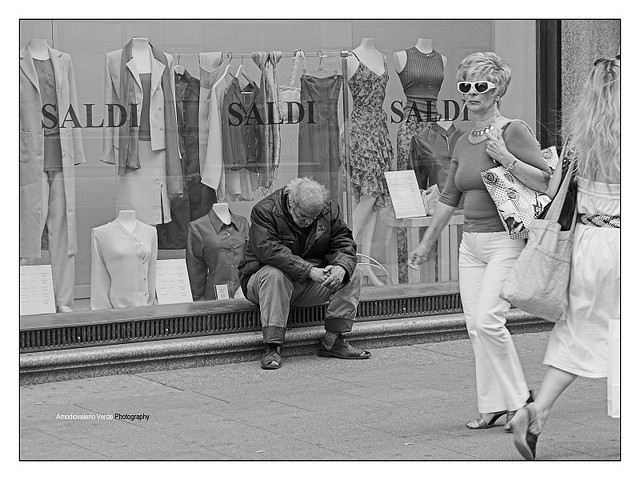
Photo by Amodiovalerio Verde via Flickr.


A recent New York Times/CBS News poll finds that nearly 60% of Americans are concerned with income inequality. The overall results may be surprising, given steady economic growth over the past few years. However, sociologist Leslie McCall has an explanation for this post-recession in the New York Times:

People think the returns to economic growth should be going to people like them as much as they should be going to people at the top.

The article highlights McCall’s research on public opinion about income inequality, specifically her analysis of the General Social Survey (GSS), a nationally representative survey conducted every two years by the National Opinion Research Center at the University of Chicago. She finds that public concern about inequality rises after recession periods, peaking several years after initial economic growth.

Photo by Gary Willmore via Flickr.
Start seeing trophy husbands. Photo by Gary Willmore via Flickr.

When a pretty, young woman is seen walking hand-in-hand with an older, perhaps less attractive, male, accusations of a “trophy wife” situation are quick to follow. But this quick judgement ignores an important factor – pretty women can be rich too. In an interview with NPR, Notre Dame sociologist Elizabeth McClintock discusses her recent study that finds little evidence for the existence of trophy wives. She tells NPR that people typically couple based on similarities in income, looks, and education, thus:

If usually rich people marry rich people and pretty people marry pretty people, then having a pretty woman with no money marry an ugly, rich guy, that’s a violation of the usual pattern that people select somebody who’s a whole lot like themselves.

Numerous studies argue that the trophy wife phenomenon makes evolutionary sense, as poor, pretty women are able to trade their looks for money. But McClintock argues that these studies are wrong. NPR’s Shankar Vedantam describes her reasoning:

McClintock thinks this earlier work is wrong for two reasons. First, the earlier studies don’t consider this important variable, which is that pretty women might themselves be well-off. So if a woman herself has wealth or status, what you really don’t have is a trophy wife phenomenon. All you have is matching rich with rich…And McClintock points out there’s another confounding variable here, which is that beauty and wealth often tend to go hand in hand. And that’s because the wealthy often have access to better nutrition, better cosmetics…. If wealth and beauty are actually going hand in hand really often it could be that lots of pretty women might themselves be rich, which again means they might not be trophy wives.

In McClintock’s study of over 1500 American couples, she found that, after controlling for the income of both partners, “the trophy wife phenomenon effectively disappeared.” Our gendered assumptions of women’s roles in relationships have helped to construct this myth of the trophy wife, which says a lot more about our own biases than actual reality. Vedantam sums it up nicely:

If you look only at the universe of good-looking guys, you will also see that good-looking men tend to be with rich women, but we are far less likely to say, oh, look, trophy husband. And so of course that’s a reflection of what’s happening inside our own heads, not actual reality.


sadie hawkins-img
Couples who share housework and have equal levels of education are as likely to stay together as couples following traditional gender roles.

In a recent New York Times oped, Stephanie Coontz cites a plethora of sociologists in her discussion of the tug-of-war between gender equality and economic inequality over current marriage trends in America. In her piece, Coontz argues that families have become more egalitarian and stable due to increased gender equality, with women increasingly gaining equal access to education and employment. However, because of the recent recession and the increased income gap, the inequality between families continues to rise. Both forces, she argues, push and pull on the rates of marriage and divorce in American society. She writes:

Sometimes these trends counteract each other, with women’s work gains partly compensating for men’s losses in low-income families. Sometimes they reinforce each other, since the new trend for high-earning men to marry high-earning women increases the relative advantage of such couples over low-income or single-earner families. For all Americans, these trends have changed the rewards, risks, and rules of marriage.

Citing sociologists Christine Schwartz and Hongyun Han, she details how couples who share housework and have equal levels of education are just as likely to stay together as those who subscribe to more traditional gender roles. Husbands have doubled the time they spend doing housework, and the percentage of Americans who believe in the “male-breadwinner” family arrangement has declined significantly. However, these increases in gender equality are counteracted by growing economic instability among families. She cites research by sociologist Philip N. Cohen, as well as a Susan Brown and I-Fen Lin, to show how, while the more educated are more likely to get married and stay married, the return on a college education continues to decrease, increasing income inequality and marriage instability. Coontz argues:

While the sexes have become more equal, society as a whole has become far less, producing especially deep losses for young men. In 1969, by the time men reached age 25, three-quarters were earning wages that could support a family of four above the poverty line. By 2004, it took until age 30 for the same percentage of men to reach this income level. And while in 1969 only 10 percent of men ages 30-35 were still low earners, by 2004 almost a quarter of men in that age range remained low earners.

Coontz then turns to sociologist Andrew Cherlin’s book Labor’s Love Lost to discuss the implications of these findings. Cherlin’s book details how two important factors have lead to a decrease in marriage rates among younger generations. First, the decrease in blue-collar work that requires only a high school diploma has significantly affected the ability of lower-income males to fulfill the historical role of bread-winner. Second, the increase in gender equality detailed above has made it so females no longer need a breadwinner in the first place, allowing them to wait for a mate with a stable income or to make that income themselves. Coontz summarizes Cherlin:

Women’s expectation of fairness and reciprocity in marriage has been rising even as men’s ability to compensate for deficits in their behavior by being “good providers” has been falling. Low-income women consistently tell researchers that the main reason they hesitate to marry – even if they are in love, even if they have moved in with a man to share expense, and even if they have a child – is that they see a bad marriage or divorce as a greater threat to their well-being than being single.

However, our very own Doug Hartmann qualifies findings that indicate a decline in marriage rates in an interview with CBS Minnesota, saying that even though younger cohorts, especially women, are waiting to pay off their student loans and build their careers before marriage, the desire to get married has not declined. Hartmann says, “When you ask people about their attitudes about marriage, their desires to get married, that doesn’t seem to be in decline. It’s just the timing of it and when it’s happening is getting put off.”

Sociologists across the country are invested in understanding the changing trends in marriage and American family life, and their research has detailed important factors contributing to these trends. Coontz ends her article with an important insight, urging us to consider the stability and equality of the marriage landscape Americans are so often nostalgic for.

If women lowered their expectations to match men’s lower economic prospects, perhaps marriage would be more common in low-income communities. But it would most likely be even less stable, and certainly less fair. Turning back the inequality revolution may be difficult. But that would certainly help more families – at almost all income levels – than turning back the gender revolution.

See more of Coontz, Cohen, and other sociologists of family life, including Coontz’s piece on how religious affiliation affects marriage rates, at the Council of Contemporary Families’ blog Families As They Really Are.