


globalization

IOL Cape Argus News wrote a piece about Elena Moore’s (Associate Professor of Sociology at the University of Cape Town) inaugural lecture titled Who Cares? The Directions of State–Family Relationships in Changing Times. Moore urges society to rethink the burden of care and argues that the work of care is often invisible. With a team of 40 researchers spanning across Ireland, South Africa, Botswana, Namibia and Malawi, Moore explores how families, government, and communities share the responsibility of care. In South Africa, Moore’s team found that there are care grant opportunities, but there are also major barriers in the application process. “We all want good care,” Moore said. “But we also want just care relations.”


Elena Moore

Abdelilah Farah (Moroccan Sociologist) wrote a commentary piece for the Carnegie Endowment for International Peace explaining how Morocco’s Gen Z is developing a new protest culture. The members of Generation Z are mobilizing in an age of rapid technological expansion where they have “developed their political consciousness within a globalized digital environment.” They are departing from traditional modes of protest expression and drawing on cultural influences such as anime, video games, and contemporary music. The commentary explains that “the digital protests of Morocco’s Generation Z can be understood as primarily cultural rather than purely political acts.” Generation Z  maintains a dual consciousness of being “globally connected yet locally grounded in experiences of hardship.”


Abdelilah Farah

In an article for The Conversation, Adam Coutts (Research Fellow in the Department of Sociology at the University of Cambridge) argues that the U.K. government’s new action plan Protecting What Matters–which centers social cohesion–is weak and vague. Coutts explains that the “plan frames division through religion, identity and Islamophobia, which are outcomes and proxies, not root causes.” He offers a better framework centering “community resilience: the measurable capacity of neighbourhoods to absorb shocks, resist divisive narratives and recover from crises.”
Adam Coutts

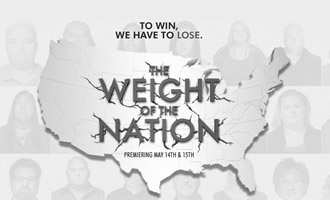
HBO Weight of the Nation Image
The promotional image for HBO's documentary series "The Weight of the Nation."

While it’s still hotly debated whether obesity is, in fact, a health crisis, in today’s New York Times, one-time food critic Frank Bruni considers recent obesity research in evolutionary science, medicine, public health, and beyond, concluding that it will require society-level change if we are to stem “a near inevitable tide.” (See also his blog post from today, “The Girth of the Globe,” which discusses Bruni’s perceptions of American dietary habits in a larger context.) The Centers for Disease Control, Bruni writes, now considers about two-thirds of Americans overweight or obese, but “Our current circumstances and our current circumferences may in fact be a toxically perfect fit.”

This is to say, learning to perfect agriculture in abundance has created “plump savings accounts of excess energy” in both our grain silos and our love handles “for an imagined future shortage that, in America today, doesn’t come.” Bruni interviews John Hoffman, an executive producer on HBO’s forthcoming documentary series “The Weight of the Nation,” who tells him that “We’ve only known a world of plenty for maybe 100 years. Our biological systems haven’t adapted to it.” And quoting from Michael L. Power and Jay Schulkin’s book The Evolution of Obesity, Bruni adds, “We evolved on the savannahs of Africa. We now live in Candyland.”

Bruni goes on in his op-ed to consider how one problem in fighting obesity is that we must eat:

“When it comes to smoking or drinking, people generally have to go cold turkey,” notes David Altshuler, an endocrinologist and geneticist, in the documentary. “But fundamentally, we have to eat.” Every meal is a… feat of calibration. “We underestimate how hard it is to change your behavior not once—not for a week or a month until you’re cured—but to change it every day for the rest of your life,” says Altshuler.

In conclusion, Bruni writes we must understand this paradox, cease to vilify the obese, and “rethink and remake our environment much more thoroughly than we seem poised to do.” This may, perhaps, be true well beyond Americans’ own equators.