
entertainment

Via Netflix.
Via Netflix.

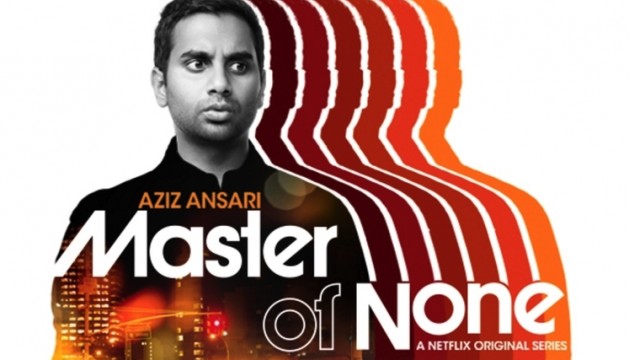
It’s an exciting day when a sociologist and a comedian write a book together, and even more so when that book turns into a Netflix series. To be clear, Aziz Ansari recently stated that his new series, Master of None (which premiered November 6th on Netflix) is not simply Modern Romance (the book he wrote with sociologist Eric Klinenberg) on the small screen. However, a recent Vogue review highlights how the show incorporates many of the ideas Ansari and Klinenberg present in their book.

Master of None is brilliant, insightful, and hilarious, the perfect vehicle for Ansari to animate the ideas and sociological concepts that he wasn’t quite able to make jump off the page earlier this year.

The show explores the dating world of New York City through the main character Dev, a 30-year-old actor. Readers of Modern Romance will notice overlaps, including when Dev takes a cue from a study cited in the book’s section, “The Effects of Non-Boring-Ass Dates,” by flying a date to Nashville. He confronts questions about monogamy when a woman wants to hook up with him to get back at her husband. And he laments that he is not “just a bubble in a phone” when he is blown off by a potential date.

Read the full article here.

Read a TSP Clipping on Modern Romance.


Bart's BlackboardIn a recent opinion column in the Star Tribune, John Rash points to the absence of religion as a major theme in shows on the national television networks.

The absence is all the more surprising considering that 80% of Americans reported to Gallup that religion plays a ‘very’ or ‘fairly’ important role in their lives.

And as Rash reminds readers, religion continues to maintain a very visible presence in other popular culture:

Topping the bestseller list is “Heaven is for Real,” about a boy witnessing the afterlife following a near-death experience.
The hottest Broadway show is “The Book of Mormon,” a satire (and grudging admiration) of the faith from the creators of “South Park.”
The highest-grossing R-rated film ever isn’t a gross-out comedy, Quentin Tarantino-style nihilistic violence, or even a sexual coming-of-age story, but “The Passion of the Christ.”

To help understand the absence, Rash turns to academia. Professor Jeanne Halgren Kilde, director of religious studies at the University of Minnesota, explains that even though network television rarely features explicitly religious themes, it is engaging in many of the same debates.

“Questions about good and evil, justice, personal destiny, love, about relationships — these are the narratives we see on TV that are the same questions religion has been asking, and answering, forever. So TV becomes in some senses a kind of superseding of what had been the religious context of discussing, to a more secular context of answering these questions.”

And, while the major religions are rarely a central theme in popular television, there has been a dramatic increase in the number of shows with spiritual and paranormal themes.

Hitting its peak around 2006, this trend inverted media maven Marshall McLuhan’s famous dictum: This time, the message was the mediums — as well as the psychics, ghost hunters and clairvoyant crimefighters who populated prime-time in shows like “Medium,” “Supernatural” and “Ghost Whisperer.”

Penny Edgell, professor of sociology at the University of Minnesota provides context to the rise.

“Network prime time is responding to a trend,” said Penny Edgell “And thus it’s perpetuating and popularizing that trend of people thinking about spiritual things, but drawing on a different kind of repertoire that’s more about relationships and flexible personal contacts that might shape your own life that don’t have anything to do with a doctrine or a church. There’s a lot of the supernatural on TV, but not a lot of organized religion. And that mirrors trends in how people are thinking about their spirituality; it mirrors a rise of a discourse that emphasized spirituality of something that’s distinct from, but not always in opposition to, organized religion.”

Rash does make note of one of the few shows where religion is discussed – America’s longest running cartoon, The Simpsons.

Even the Catholic Church’s official newspaper, Osservatore Ramono, honed in on Homer, saying he “finds in God his last refuge, even though he sometimes gets His name sensationally wrong.”

Whether or not the misadventures of America’s favorite animated family is the appropriate venue for a national discussion of religion remains up for debate.

Ale

Many of our posts focus on colleagues’ research, but teaching is also newsworthy.  The student newspaper at the University of South Carolina recently ran an article about an upcoming sociology course at USC—Lady Gaga and the Sociology of Fame.

The professor, Mathieu Deflem, explained the idea behind the course:

“We’re going to look at Lady Gaga as a social event,” Deflem said. “So it’s not the person, and it’s not the music. It’s more this thing out there in society that has 10 million followers on Facebook and six million on Twitter. I mean, that’s a social phenomenon. It’s a global social phenomenon. So the central question of the course is, this fame, which is ironically also the theme of her first records, how can it be accounted for? What are some of the mechanisms and some of the conditions of Lady Gaga’s rise to popularity?”

Deflem added that another key question of the course is, “What does it mean, and how does a person become famous?”

Deflem usually teaches criminology, the sociology of law, and policing, but he is excited to examine the popular social phenomenon in a sociological light.

In the beginning, the course will deal with the sociology of popularity in general. The first couple weeks probably won’t be about Lady Gaga at all. But then the Gaga scenario will be used as a real-life example detailing sociological traits. More specific information about the course content can be found at gagacourse.net – a site Deflem has already created for the class.