
by
John Ziegler,
Jun 3, 2013, at 12:08 pm

Photo by mahalie stackpole via flickr.com.
“Pomp and Circumstance” is no longer ringing in the rafters at college arenas across the country, and many members of the Class of 2013 are searching for their first post-graduation jobs. One wrinkle: though more than half of those graduates are female, according to a report by the American Association of University Women (AAUW), men working full-time one year after graduation will receive salaries that are 18% higher.
The study pushes back against notions that women’s wages are lower because of decisions now made later in the life course (such as leaving the corporate ladder to have children, for example). Researches found that approximately two-thirds of the pay gap just one year after graduation can be explained by field of study, grades, hours worked, and occupation, but the remaining portion is unexplained—that is, the only commonality is that the people getting the lower salaries are women.
The fact that so much of this pay gap escapes explanation poses a problem for rectifying the situation. Christianne Corbett, a senior researcher with the AAUW and one of the study’s authors, explains:
The pay gap cannot be solved by individual women alone. The bulk of the work has to be done by employers because it’s a systemic problem.
Learning is good, but doing will be better.
by
Evan Stewart,
Mar 6, 2013, at 11:00 am

Photo by Richard Eriksson via flickr.com.
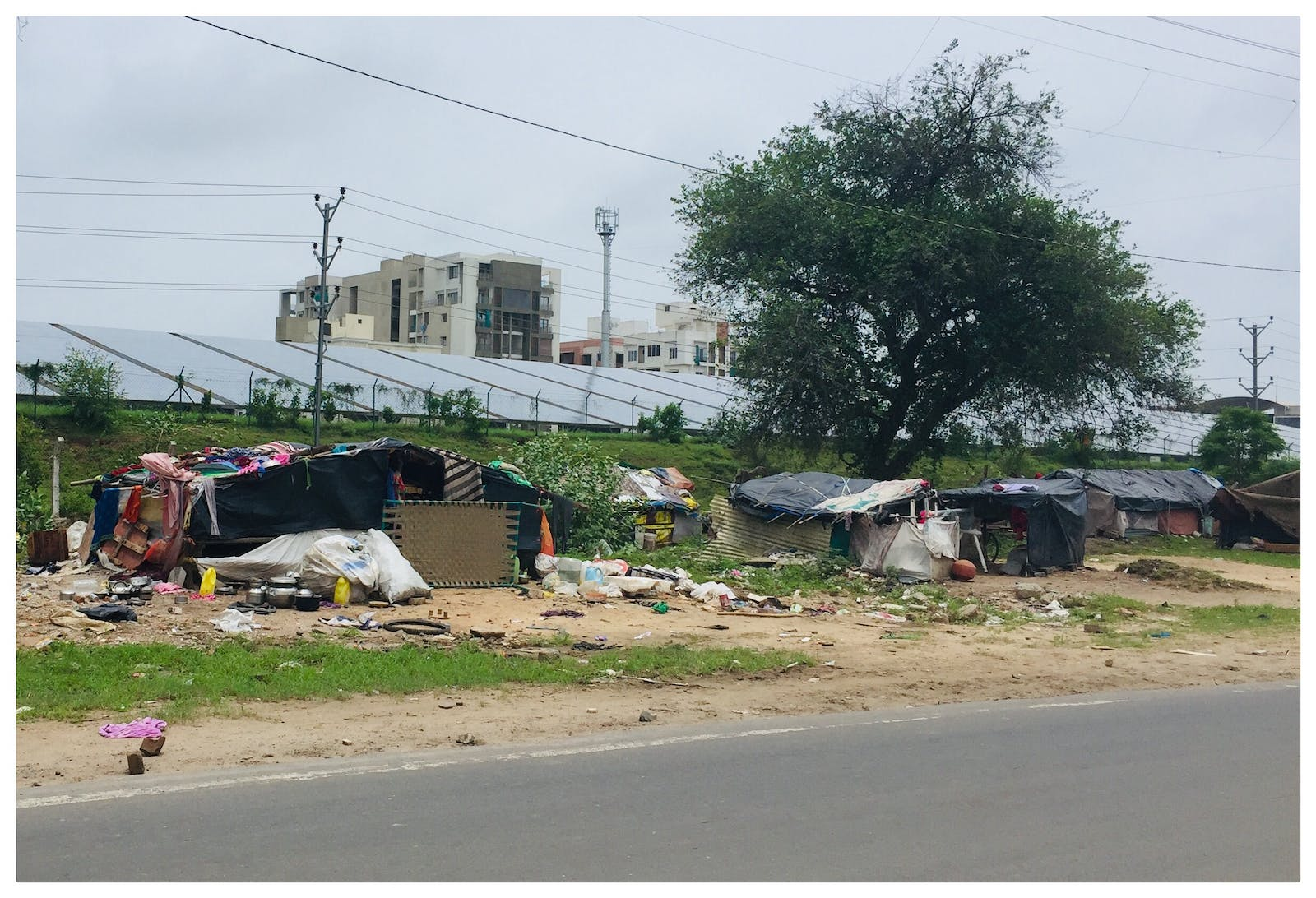
Thinking about moving conjures images of moving up—for a better job, a cooler city, or even that deluxe apartment in the sky. However, a recent article from USA Today paints a much different picture about the reasons people in the U.S. pack up and go.
The report sums up a new analysis of Census data presented by the US 2010 project under the leadership of Brown University sociologist John Logan. It confirms our worst suspicions about the Great Recession: more people are moving down into cheaper housing, having lost their jobs or taken pay cuts. From the article:
“Typically, over the last couple of decades, when Americans moved, they moved to improve their lives,” said Michael Stoll, author of the research and chairman of UCLA’s public policy department. “This is the shock: For the first time, Americans are moving for downward economic mobility. Either they lost their house or can’t afford where they’re renting currently or needed to save money.”
In the face of the data, maybe it’s time to stop humming the theme from “The Jeffersons” and start listening to the words of Billy Joel: “If that’s movin’ up,” well, we’re just “movin’ out.”
by
Evan Stewart,
Feb 23, 2013, at 08:49 am

At TGI Friday’s, “flair”=fun. Photo by Derek Morrison via flickr.com.
It’s a common problem in post-recession America: you hate your job, but you also can’t just up and get a new one. We usually have social options for dealing with this, ranging from commiserating with co-workers in the breakroom to organizing for better working conditions. But if you work in the service industry, where the customer isn’t too keen on knowing you hate your job, bosses can try to bust up the social bandwagon.
A piece for MSNBC’s The Ed Show makes great use of Arlie Hochschild’s concept of “emotional labor.” The piece gives a handful of examples in which employees, from Starbucks baristas to Wal-Mart greeters, are increasingly burdened with managers’ attempts to regulate how much they demonstrate enjoying their work. The author even quotes one account of employees who could be fired for not touching each other frequently enough!
This raises some fascinating questions for work in the 21st century. We know all social interactions are governed by rules and institutions, but when work is a scarce necessity, do we have the luxury of “doing what we love,” or must we “fake it ‘til we make it”… to a better job?
by
Andrew Wiebe,
Feb 18, 2013, at 10:24 am

Photo by Adam Lynch via flickr.com
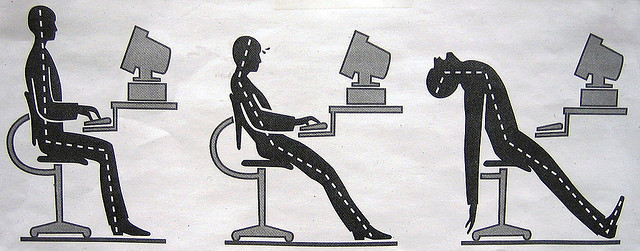
It seems like there’s never enough time: today’s workplaces demand efficiency and getting more done in less time. Workers cut down on breaks, vacation, and precious sleep. Luckily, Tony Schwartz brings good news in his op-ed for the New York Times:
A new and growing body of multidisciplinary research shows that strategic renewal—including daytime workouts, short afternoon naps, longer sleep hours, more time away from the office and longer, more frequent vacations—boosts productivity, job performance and, of course, health.
In a country where “more than 50 percent [of workers] assume they’ll work during their vacations,” “an average of 9.2 vacation days [go] unused,” and “sleep deprivation costs American companies $63.2 billion a year in lost productivity,” these midday renewals offer much needed relief. Schwartz cites study after study showing everything from a full night’s sleep improving basketball performance to naps improving memory test results and alertness and reaction time among air traffic controllers. Another study found:
Working in 90-minute intervals turns out to be a prescription for maximizing productivity. Professor K. Anders Ericsson and his colleagues at Florida State University have studied elite performers, including musicians, athletes, actors and chess players. In each of these fields, Dr. Ericsson found that the best performers typically practice in uninterrupted sessions that last no more than 90 minutes.
Next time you find yourself joking about needing a nap, pull up that carpet square, kindergarten style. Those kids know what they’re up to.
by
Erin Hoekstra,
Feb 14, 2013, at 10:04 am

A chart from O’Rourke’s paper, via the Boston Globe.
A social problem examined by sociologists for decades, the white-black wealth gap has widened to record highs during the recession, with the median wealth for white households at twenty times that of their black counterparts. On the Boston Globe’s Brainiac blog, Kevin Hartnett shares a recent study by Princeton sociology graduate student Rourke O’Brien. The study quantitatively tests the idea that this wealth discrepancy is due, in part, to giving or loaning money to relatives.
Middle-income blacks are more than twice as likely as middle-income whites to have a poor sibling and more than four times as likely to have parents below the poverty line. And because of these relationships, they’re called upon more often to provide financial assistance.
Whereas investments can be used to generate more wealth, gifts and informal loans to family members are usually spent paying bills or covering immediate financial needs. O’Brien argues that informal financial support networks can account for roughly 27% of the white-black wealth gap.
by
Andrew Wiebe,
Feb 11, 2013, at 11:15 am

At 80 years old, Hubert Elliot is North Carolina’s oldest Department of Transportation Worker. Photo by NCDOT Communications via flickr.com.
As the baby boomers age, so does the American workforce. It is projected that by the end of this decade, a quarter of the nation’s workforce will be fifty-five or older. Sociologist Amy Blackstone, of the University of Maine, took interest and undertook a study of this group’s workplace experiences. In a piece for the Bangor Daily News, Blackstone explains the distressing results:
While older workers generally report positive experiences on the job, there are notable patterns in the harmful experiences they report. A significant number of older workers report feeling undervalued and bullied at work. Further, many older workers do not speak up about their negative experiences, nor do those who witness bullying or harassment of older workers intervene on their behalf.
In Blackstone’s survey results, older workers said they felt devalued by their younger coworkers, as though they were useless. They felt ignored and even bullied. One woman wrote:
“After about age 60-65, I began to notice that people would sometimes ignore me as though I had become invisible.”
Blackstone provides a few suggestions for improving employment for older workers. These include educating and reminding employers and employees of the importance of a positive workplace atmosphere, the knowledge and experience older workers may hold, and the need for support and bystander intervention.
by
Carolyn Lubben,
Jan 26, 2013, at 06:52 am

This Chinese park sign forbids prostitutes (along with superstitious activities, kite-flying, and feudalism), but says nothing about mistresses. Photo by Yendor Oz via flickr.com.
Providing sexual services in exchange for money is illegal in many parts of the world, “oldest profession” or not. And where prostitution is legal, it is often not regulated, leading to a whole new set of problems. On the other hand, being a long-term, extramarital lover may be frowned upon, but it’s generally not illegal. Sociologist and sex researcher Li Yinhe argues (as reported by the online edition of the South China Morning Post) that if mistresses and prostitutes are in the “same supply-chain”—that is, they essentially provide the same service—then prostitution should be decriminalized. In her talk at a “Love and Culture” forum, Li went on to discuss modern marriage, which she also sees in socio-economic terms:
…[T]he sociology professor said that judging from its current form, [marriage] would soon break away from its “shackles” and become more “free”… “The reason we had marriage was [traditionally] to bear children and allow each generation to inherit private property,” she said.
“If there are other uses for property and less cohabiting couples raising children, then the institution of marriage is likely to become extinct,” she added.
by
Andrew Wiebe,
Dec 13, 2012, at 11:58 am

A new, educational toy from Japan, Wammy. Photo by japan_style via flickr.
With the holidays bringing so much attention to our shopping habits and stores, many odd trends are bound to crop up. One recent Citing, for instance, looked at the long-standing gender-segregation of toy aisles. Now we spot another toy divide, perhaps as pervasive, but harder to notice: the New York Times argues toy stores divide kids by class, too. (more…)
by
Andrew Wiebe,
Dec 3, 2012, at 10:42 am

Photo by jemsweb via flickr.com
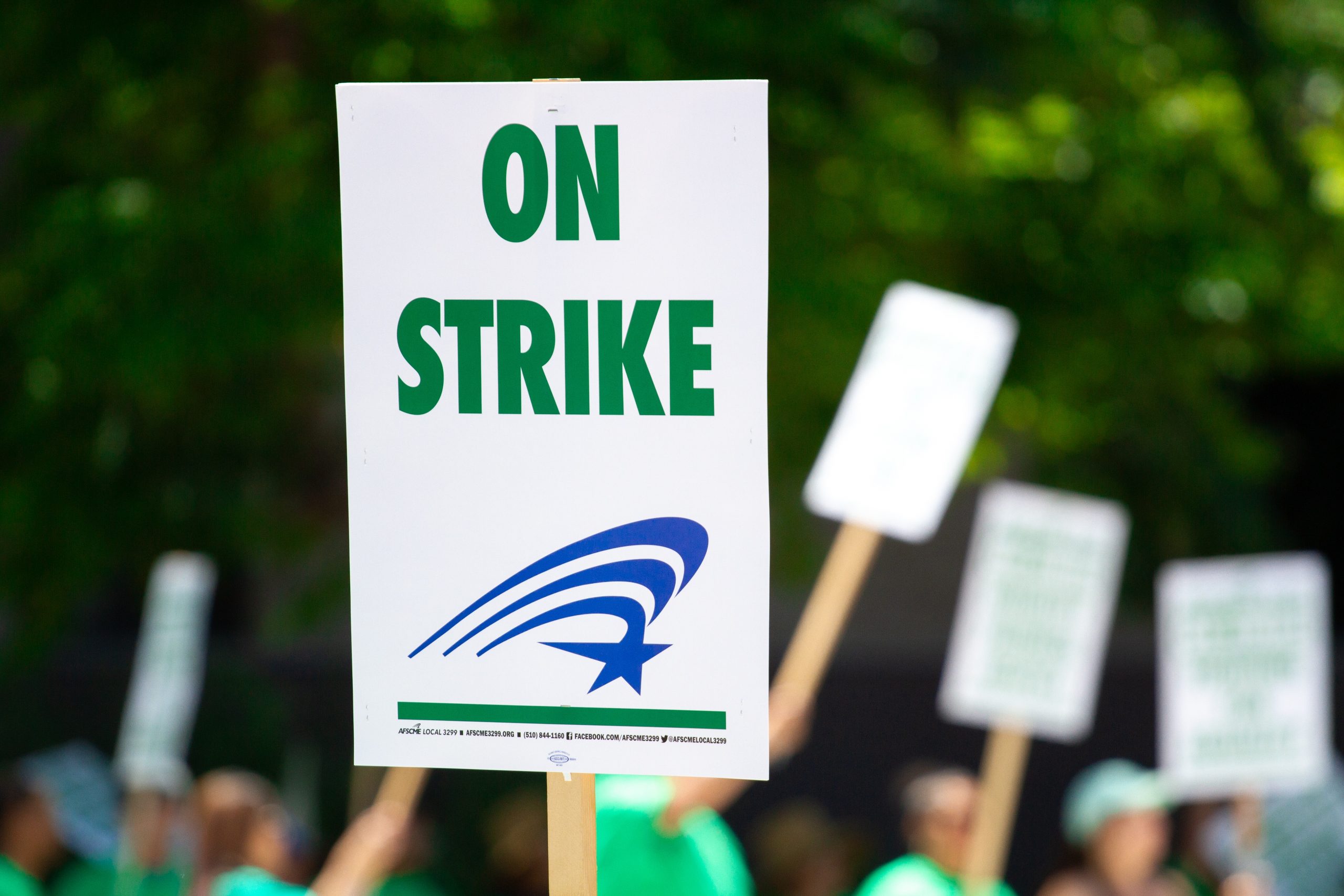
Fast food jobs are notorious for their low pay and negligible benefits. In an article for the New York Times, Steven Greenhouse explains that a group of fast food workers and union organizers have launched a campaign to unionize workers in New York City’s fast food industry called Fast Food Forward. The campaign is the largest effort to unionize fast food workers the United States has ever seen. Efforts to unionize these workers have been undertaken before, but never on this scale. The movement is not focusing of one franchise or chain, but instead includes many workers from popular chains around the city, including McDonalds, Dominos, Taco Bell, and Wendy’s.
The Fast Food Forward campaign hopes to increase wages and union recognition while reducing income inequality by unionizing these low-wage workers. Sociologist Ruth Milkman, of the City University of New York, says it’ll be no easy task, explaining that very few efforts have been in this direction in the past because of its perceived difficulty. She explains, “These jobs have extremely high turnover, so by the time you get around to organizing folks, they’re not on the job anymore.” Milkman is optimistic, however, New York City’s deep history of unionizing might help this movement find its footing.
A lot rests on the success or failure of this campaign. Right now, NYC has tens of thousands of fast food workers and nearly all of them are paid wages that place them below the poverty line (their median wage is $9 per hour, which means even if they work full time, which many can’t even if they’d like to, they’d earn just $18,500 a year, with sparse benefits). Because fast food pay is so low, many workers must also seek public assistance, and that means taxpayers (including the workers themselves) have to pick up the slack for multinational corporations. Unionization might be a first step in fiscal relief for thousands of households—and the government.
by
Erin Hoekstra,
Oct 31, 2012, at 07:31 am

Barter Photo by Irina Slutsky via flickr.com
The global recession has caused a crisis of trust in both the political and financial systems. In his new book Aftermath, Spanish sociologist Manuel Castells turns his attention to the current financial crisis and life beyond the crisis. Speaking to the BBC’s Paul Mason recently, Castells talked about his particular interest in how the recession has forced people to reimagine their lives outside of their identity as a consumer. It has, he says, produced new, “non-capitalist” forms of economic behavior operating outside the financial system, rather than seeking to reform it.
A kind of protest counterculture, these growing alternative economies directly resist individualistic consumer culture through strategies such as no-interest lending, barter networks for goods and services, and co-operatives through which consumers can collectively access and raise resources. This financial system backlash also includes the rise of “ethical” banks, which forbid the kind of speculative investment and lending that created the financial crisis in the first place.
Another cooperative ethical model includes “crowdfunding,” in which individuals collectively raise money toward a specific goal. Made famous by websites such as Kickstarter and Indiegogo, crowdfunding has been used for software development, independent movie and music ventures, and political campaigns. It has also been used as grassroots activism. This summer, as documented in a Christian Science Monitor article, the Spanish government refused to investigate the collapse of one of its major banks, which taxpayer money had bailed out. Through crowdfunding, the Spanish version of the Occupy movement raised enough money to initiate a class action lawsuit against the bank—an incentive for the government to launch its own investigation into the bank’s collapse.
The significance of alternative economic movements for Castells, then, lies in the control that it gives to individuals and groups otherwise rendered powerless by political and economic structures.