
Tag Archives: class

Canines and Class Conflict

y2.d108 | tug of war.Judging by the popularity of cat and dog videos on the Internet, it seems safe to say that pets have assumed an important role in our society.

However, as Benedict Carey explores in a recent NY Times article, the pet’s position within the family can be a contentious topic.

“The big bone of contention was that my mom and my sister thought that he was too smart to be treated like a dog; they thought he was a person and should be treated as such — well, spoiled,” said Danielle, a Florida woman who asked that her last name not be published to avoid more family pet strife. “The dog remains to this day, 10 years later, a source of contention and anger.”

To understand human pet relationships, Carey turns to the field of sociology. David Blouin, a sociologist at Indiana University, explains that there are three basic categories of belief concerning pets.  “Dominionists” who see pets as a useful, and beloved, but ranked below humans and replaceable. “Humanists,” who cherish their pets and raise them to the same status as a favored child. And, “protectionists,” who base their views on what they think is “best” for the animal.

“These are ideologies, and so protectionists are very critical of humanists, who are very critical of dominionists, and so on,” Dr. Blouin said. “You can see where this can create problems if people in a family have different orientations. Every little decision about the pet is loaded.”

And, whether you believe Fido should be in the yard or snuggling under the down comforter at night may not simply be a matter of personal preference. Rather, as sociologist Elizabeth Terrien helps us understand, views vary by class, ethnicity and geographic location.

One clear trend that has emerged is that people from rural backgrounds tend to see their dogs as guardians to be kept outside, whereas middle-class couples typically treat their hounds as children, often having them sleep in the master bedroom, or a special bed.

Terrien explains, the cultural and class-based differences in understanding how a pet should be treated can lead to groups judging each other negatively.

In neighborhoods with a larger Latino immigrant population, owners were more likely to say “protector,” or even “toy for the children,” she found. “In those neighborhoods you’ll sometimes see kids yanking around a dog on the leash, pushing and playing, the sort of behavior that some middle-class owners would think of as abuse” she said.

Carey’s article provides an important reminder that sometimes even the most personal – for instance, family arguments over whether the dog is included in the will – is linked to larger social forces. Also, Carey confirms yet again that class matters, even for dogs and cats.


what’s at stake in wisconsin

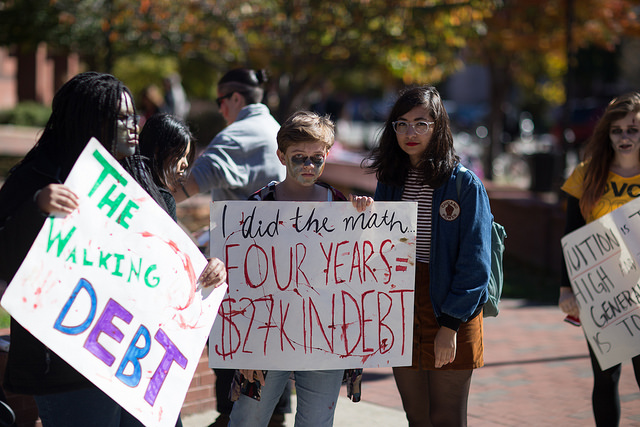
Protesting Scott Walker
In an op-ed published in the Raleigh-based paper, the Newsobserver, sociology Ph.D student Amanda Gengler provides insight into what is at stake in the current political struggle in Wisconsin. To do so Gengler draws upon her experience at the University of Wisconsin-Madison where she earned her master’s degree.

As a graduate student at the University of Wisconsin-Madison 10 years ago, every month a few dollars of my stipend went to pay dues to the TAA; a unique union that represents and protects graduate employees working in the UW-System. In return, I worked under a contract that ensured full health care benefits and basic dental care (with no out-of-pocket premiums), and tuition remission (without which my education would not have been possible) as well as other fair labor protections.

Now, even after each subsequent renegotiation of the rights for Wisconsin’s graduate employees has resulted in more and more concessions, current Gov. Scott Walker is proposing to remove the TAA’s collective bargaining rights altogether. This would make it impossible to fight for any of these protections, all of which could be immediately revoked.

Graduate students are not alone in seeing this as an attack on the education system.

Under the rallying cry “Hands off our Teachers,” undergraduates have taken to the streets in recent days alongside their graduate student instructors.

Gengler cautions us to not see this as an isolated threat directed at the University system.

Wisconsin’s 3,000 graduate student workers are but one of the many constituencies that will be directly harmed by the state government’s attack on unions and workers’ rights. As Wisconsin’s unions offer up economic concessions in terms of pay and premiums, only to be completely rebuffed by state lawmakers, it is clear that this issue is not about the budget: it is about ending workers’ collective bargaining rights.

The op-ed serves as a call for all workers and unions to pay close attention to what is occurring in Wisconsin. While the situation appears bleak, Gengler leaves us with a statement of resolve:

Those of us who have been fortunate enough to have those rights know what they are worth, and the thousands who continue to flood Madison’s streets make it clear that the right to fight is one thing they will not concede.


Living Politics

Vietnam-83

Arab News recently covered the two books that sociologist Asef Bayat published this year.  In them, he uses social movement theory to explain how everyday actions create change in the Middle East.

While many believe radical Islam expresses the interests of the poor, Bayat has observed that the urban poor are generally reluctant to support any kind of political movement. The poor cannot afford to be ideological, but they are interested in organizations and associations that can help them and answer their needs. Their political opinion is not linked to political Islam, but in a poor people’s “nonmovement,” which is the main form of activism in the Muslim Middle East.

Instead of organized politics, everyday life turns into “street politics.”

The concept of “street politics” is closely tied to the economic situation prevalent in the Middle East. Bayat rightly points out that the streets of Cairo, Tehran or Jakarta are jam-packed with people “compelled by the poverty or dispossession” to work, socialize and spend their day in the public spaces. Streets allow people to come into contact with each other and share their problems and this can turn a small manifestation into a massive demonstration. Revolutions and protest movements originate on the streets. Therefore, authorities are often weary of the potential danger of street politics, which often reflect the feelings and opinions of a nation.

The organizations and associations that work to meet the needs of the poor people’s “nonmovement” are also covered by Bayat.

Bayat rightfully highlights the positive role played by Muslim movements who provided health care, education and financial aid. This is the case of the Rifah Party in Turkey, the Islamic Salvation Front (FIS) in Algeria and how Hezbollah filled the vacuum triggered by the total absence of the state in Lebanon. The growing number of nongovernmental organizations (NGOs) confirms the vital role they play especially in Iraq, Lebanon, Palestine and Sudan. Social Islam and NGOization “despite their flaws, appear to have become the dominant forms of activism that now contribute to improving some aspects of people’s lives in Middle Eastern countries,” writes Bayat.

Let Them Eat Cheetos

Mission accomplished! $20 worth of jalapeño cheetos
The phrase “you are what you eat” may refer to more than your physical make-up. In fact, the food in your fridge might say just as much about your social class as about your health.  Newsweek reports:

According to data released last week by the U.S. Department of Agriculture, 17 percent of Americans—more than 50 million people—live in households that are “food insecure,” a term that means a family sometimes runs out of money to buy food, or it sometimes runs out of food before it can get more money. Food insecurity is especially high in households headed by a single mother. It is most severe in the South, and in big cities. In New York City, 1.4 million people are food insecure, and 257,000 of them live near me, in Brooklyn. Food insecurity is linked, of course, to other economic measures like housing and employment, so it surprised no one that the biggest surge in food insecurity since the agency established the measure in 1995 occurred between 2007 and 2008, at the start of the economic downturn.

Growing inequality between the rich and the poor in the United States is reflected at the dinner table as well:

Among the lowest quintile of American families, mean household income has held relatively steady between $10,000 and $13,000 for the past two decades (in inflation-adjusted dollars); among the highest, income has jumped 20 percent to $170,800 over the same period, according to census data. What this means, in practical terms, is that the richest Americans can afford to buy berries out of season at Whole Foods—the upscale grocery chain that recently reported a 58 percent increase in its quarterly profits—while the food insecure often eat what they can: highly caloric, mass-produced foods like pizza and packaged cakes that fill them up quickly.

Using language evocative of sociologist Pierre Bourdieu, one epidemiologist explains:

Lower-income families don’t subsist on junk food and fast food because they lack nutritional education, as some have argued. And though many poor neighborhoods are, indeed, food deserts—meaning that the people who live there don’t have access to a well-stocked supermarket—many are not. Lower-income families choose sugary, fat, and processed foods because they’re cheaper—and because they taste good. In a paper published last spring, Drewnowski showed how the prices of specific foods changed between 2004 and 2008 based on data from Seattle-area supermarkets. While food prices overall rose about 25 percent, the most nutritious foods (red peppers, raw oysters, spinach, mustard greens, romaine lettuce) rose 29 percent, while the least nutritious foods (white sugar, hard candy, jelly beans, and cola) rose just 16 percent.

“In America,” Drewnowski wrote in an e-mail, “food has become the premier marker of social distinctions, that is to say—social class. It used to be clothing and fashion, but no longer, now that ‘luxury’ has become affordable and available to all.”

Concern about rising obesity, especially among low income communities, had led to some controversial policy proposals.

In recent weeks the news in New York City has been full with a controversial proposal to ban food-stamp recipients from using their government money to buy soda. Local public-health officials insist they need to be more proactive about slowing obesity; a recent study found that 40 percent of the children in New York City’s kindergarten through eighth-grade classrooms were either overweight or obese. (Nationwide, 36 percent of 6- to 11-year-olds are overweight or obese.)

But French sociologist Claude Fischler suggests that there might be a better way to address both food insecurity and obesity: Americans should be more French about food.

Americans take an approach to food and eating that is unlike any other people in history. For one thing, we regard food primarily as (good or bad) nutrition. When asked “What is eating well?” Americans generally answer in the language of daily allowances: they talk about calories and carbs, fats, and sugars. They don’t see eating as a social activity, and they don’t see food—as it has been seen for millennia—as a shared resource, like a loaf of bread passed around the table. When asked “What is eating well?” the French inevitably answer in terms of “conviviality”: togetherness, intimacy, and good tastes unfolding in a predictable way.

Even more idiosyncratic than our obsession with nutrition, says Fischler, is that Americans see food choice as a matter of personal freedom, an inalienable right. Americans want to eat what they want: morels or Big Macs. They want to eat where they want, in the car or alfresco. And they want to eat when they want. With the exception of Thanksgiving, when most of us dine off the same turkey menu, we are food libertarians. In surveys, Fischler has found no single time of day (or night) when Americans predictably sit together and eat. By contrast, 54 percent of the French dine at 12:30 each day. Only 9.5 percent of the French are obese.

Others suggest addressing systematic barriers to food accessibility and delivery. According to author and foodie icon Micahel Pollan:

“Essentially,” he says, “we have a system where wealthy farmers feed the poor crap and poor farmers feed the wealthy high-quality food.” He points to Walmart’s recent announcement of a program that will put more locally grown food on its shelves as an indication that big retailers are looking to sell fresh produce in a scalable way. These fruits and vegetables might not be organic, but the goal, says Pollan, is not to be absolutist in one’s food ideology. “I argue for being conscious,” he says, “but perfectionism is an enemy of progress.”

Community activists agree:

Food co-ops and community-garden associations are doing better urban outreach. Municipalities are establishing bus routes between poor neighborhoods and those where well-stocked supermarkets exist.

Joel Berg, executive director of the New York City Coalition Against Hunger, says these programs are good, but they need to go much, much further. He believes, like Fischler, that the answer lies in seeing food more as a shared resource, like water, than as a consumer product, like shoes. “It’s a nuanced conversation, but I think ‘local’ or ‘organic’ as the shorthand for all things good is way too simplistic,” says Berg. “I think we need a broader conversation about scale, working conditions, and environmental impact. It’s a little too much of people buying easy virtue.”re as well,” Berg says…

Berg believes that part of the answer lies in working with Big Food. The food industry hasn’t been entirely bad: it developed the technology to bring apples to Wisconsin in the middle of winter, after all. It could surely make sustainably produced fruits and vegetables affordable and available. “We need to bring social justice to bigger agriculture as well,” Berg says.

Our Love Affair with Marriage

20101113_0834

Americans love marriage.  The wedding industry is worth over 40 billion dollars, and TV shows and magazines continually cover stories of romantic proposals, show us how women chose their wedding dresses, and highlight when and where celebrities tied the knot.  But, TIME recently confirmed a sociological story: marriage is changing.

In 1978, 28% of people surveyed thought that marriage was becoming obsolete.  Today, a new study conducted by the Pew Research Center and TIME revealed that 40% of people think it’s obsolete.

Even more surprising: overwhelmingly, Americans still venerate marriage enough to want to try it. About 70% of us have been married at least once, according to the 2010 Census. The Pew poll found that although 44% of Americans under 30 believe marriage is heading for extinction, only 5% of those in that age group do not want to get married. Sociologists note that Americans have a rate of marriage — and of remarriage — among the highest in the Western world. (In between is a divorce rate higher than that of most countries in the European Union.) We spill copious amounts of ink and spend copious amounts of money being anxious about marriage, both collectively and individually. We view the state of our families as a symbol of the state of our nation, and we treat marriage as a personal project, something we work at and try to perfect. “Getting married is a way to show family and friends that you have a successful personal life,” says Andrew Cherlin, a sociologist at Johns Hopkins University and the author of The Marriage-Go-Round: The State of Marriage and the Family in America Today. “It’s like the ultimate merit badge.”

This badge of merit has changed over the past few decades.  In 1960, 70% of American adults were married.  Now, about half are.  Also, wealthy, highly educated people are now more likely to get married/be married than those with lower levels of education and socioeconomic statuses.

The change is mostly a numbers game. Since more women than men have graduated from college for several decades, it’s more likely than it used to be that a male college graduate will meet, fall in love with, wed and share the salary of a woman with a degree. Women’s advances in education have roughly paralleled the growth of the knowledge economy, so the slice of the family bacon she brings home will be substantial.

These changes would suggest that the drive to finish college would explain why fewer people are married.  But, in the last two decades, people with a high school education began to get married later than college graduates.

What has brought about the switch? It’s not any disparity in desire. According to the Pew survey, 46% of college graduates want to get married, and 44% of the less educated do. “Fifty years ago, if you were a high school dropout [or] if you were a college graduate or a doctor, marriage probably meant more or less the same thing,” says Conley [a sociologist at New York University]. “Now it’s very different depending where you are in society.” Getting married is an important part of college graduates’ plans for their future. For the less well educated, he says, it’s often the only plan.

Promising publicly to be someone’s partner for life used to be something people did to lay the foundation of their independent life. It was the demarcation of adulthood. Now it’s more of a finishing touch, the last brick in the edifice, sociologists believe. “Marriage is the capstone for both the college-educated and the less well educated,” says Johns Hopkins’ Cherlin. “The college-educated wait until they’re finished with their education and their careers are launched. The less educated wait until they feel comfortable financially.

And as they wait, they are increasingly likely to pass the time under the same roof.

Cohabitation is on the rise not just because of the economy. It’s so commonplace these days that less than half the country thinks living together is a bad idea. Couples who move in together before marrying don’t divorce any less often, say studies, although that might change as the practice becomes more widespread. In any case, academic analysis doesn’t seem to be as compelling to most people as the example set by Angelina Jolie and Brad Pitt. Or as splitting the rent.

But,

“Marriage is still the way Americans tend to do long-term, stable partnerships,” says Cherlin. “We have the shortest cohabiting relationships of any wealthy country in the world. In some European countries, we see couples who live together for decades.” To this day, only 6% of American children have parents who live together without being married.

This story is further nuanced by differences in class and views about what is best for children.  Check out the full article!

Hipsters Hating Hipsters

EpicThe hipster is a difficult group to define for those that seem to be the most exemplary examples of the term are also the most offended by the label.

A year ago Mark Greif, a professor in Literary Studies at the New School, and his colleagues began their investigation of the ‘hipster’.  In a recent essay in the NY Times, Greif reflects upon some of their findings  and explains how Pierre Bourdieu’s masterwork, Distinction: A Social Critique of the Judgement of Taste, provides a base to understand the meaning of ‘hipster’.

In conducting the study, Greif was immediately surprised by the intense emotions and self-doubt that seemingly superficial topic generated.

The responses were more impassioned than those we’d had in our discussions on health care, young conservatives and feminism. And perfectly blameless individuals began flagellating themselves: “Am I a hipster?

Greif turns to Bourdieu – A French sociologist who died in 2002 at the age 71 after achieving a level of fame and public interest rarely obtained by academics -  to help us understand why so much seems to be stake. While Bourdieu’s biographical details provide little connection to people wearing skinny black jeans and riding fixed-gear bikes, his account of the way what people consume becomes a means of separating themselves from other groups provides the framework to study the rise of the hipsters.

Taste is not stable and peaceful, but a means of strategy and competition. Those superior in wealth use it to pretend they are superior in spirit. Groups closer in social class who yet draw their status from different sources use taste and its attainments to disdain one another and get a leg up. These conflicts for social dominance through culture are exactly what drive the dynamics within communities whose members are regarded as hipsters.

From this perspective the coffee shops, bars, and Roller Derby track become the sites of social struggle.

Once you take the Bourdieuian view, you can see how hipster neighborhoods are crossroads where young people from different origins, all crammed together, jockey for social gain.

The main strategy in this competition is to establish yourself as being more ‘authentic’ than everyone else.

Proving that someone is trying desperately to boost himself instantly undoes him as an opponent. He’s a fake, while you are a natural aristocrat of taste. That’s why “He’s not for real, he’s just a hipster” is a potent insult among all the people identifiable as hipsters themselves.

This does not only apply to people with ironic mustaches.

Many of us try to justify our privileges by pretending that our superb tastes and intellect prove we deserve them, reflecting our inner superiority. Those below us economically, the reasoning goes, don’t appreciate what we do; similarly, they couldn’t fill our jobs, handle our wealth or survive our difficulties. Of course this is a terrible lie.

No Longer Off Limits?

Morningside Heights/HarlemSince the 1960s, sociologists have shied away from explaining the persistence of poverty in terms of cultural factors, instead emphasizing the social structures that create and perpetuate poverty. Now, the New York Times reports, there seems to be a resurgence of analysis linking culture and persistent poverty.

The old debate has shaped the new. Last month Princeton and the Brookings Institution released a collection of papers on unmarried parents, a subject, it noted, that became off-limits after the Moynihan report. At the recent annual meeting of the American Sociological Association, attendees discussed the resurgence of scholarship on culture. And in Washington last spring, social scientists participated in a Congressional briefing on culture and poverty linked to a special issue of The Annals, the journal of the American Academy of Political and Social Science.

This, however, is not a reproduction of ‘culture of poverty’ scholarship; current work is significantly different:

With these studies come many new and varied definitions of culture, but they all differ from the ’60s-era model in these crucial respects: Today, social scientists are rejecting the notion of a monolithic and unchanging culture of poverty. And they attribute destructive attitudes and behavior not to inherent moral character but to sustained racism and isolation.

Harvard sociologist Robert J. Sampson says that how people collectively view their community matters.

The shared perception of a neighborhood — is it on the rise or stagnant? — does a better job of predicting a community’s future than the actual level of poverty, he said.

Sociologists try to unpack what this means:

Seeking to recapture the topic from economists, sociologists have ventured into poor neighborhoods to delve deeper into the attitudes of residents. Their results have challenged some common assumptions, like the belief that poor mothers remain single because they don’t value marriage.

In Philadelphia, for example, low-income mothers told the sociologists Kathryn Edin and Maria Kefalas that they thought marriage was profoundly important, even sacred, but doubted that their partners were “marriage material.” Their results have prompted some lawmakers and poverty experts to conclude that programs that promote marriage without changing economic and social conditions are unlikely to work.

The article speculates about several reasons why a cultural approach to studying poverty is reemerging, including a new generation of scholars, advancements in data collection and analysis, and shifts in broader discourse and attitudes outside the university, as well.

Take a look at the full article.

The New Black Middle Class?

Census data are revealing growing income levels and declining rates of marriage  in the black middle class, according to the Washington Post. One sociologist reflects on her own experience with these trends:

Kris Marsh’s household doesn’t have two incomes. But in Prince George’s County, she is increasingly becoming the face of the black middle class.

Marsh, a sociologist at the University of Maryland, moved to Bowie last year from Los Angeles, determined to live in a place she had always heard was the promised land for educated, successful African Americans. She bought a large, single-family house in a development where many of her neighbors are also single women.

“I found a community I’m in love with,” said Marsh, who has done research on the role that single women are playing in fueling the expansion of the black middle class. “Just because I didn’t have a partner or a husband, it wasn’t going to prevent me from living in the area.”

Marsh’s experience in Maryland typifies broader national trends:

New census statistics from data collected in 2007 and 2008 show that an increasing number of African Americans across the country are becoming more like those in Prince George’s, as well as closer to the national demographic norm. Many blacks made strides during the past decade, with education levels and incomes rising faster than those of the U.S. population as a whole.

In 2008, 20 percent of African Americans had a bachelor’s or advanced degree, a 19 percent jump from 2000. The percentage of black households making more than $75,000 has gone up 42 percent since 1999, from about 13 percent to 18 percent.

But what of the Great Recession? Demographers weigh in:

The statistics do not reflect the effects of the recession, which has caused high unemployment among black men in particular, but demographers say it is unlikely to alter the long-term trend.

A political scientist, along with Marsh, offer some possible explanations for these changes:

Michael Dawson, a professor of political science at the University of Chicago, said black women are more likely to be single because of the high number of jailed African American men and because black women tend to obtain higher levels of education than black men, narrowing their options for a mate who is available and similarly educated.

Marsh said her research has shown that African American women are marrying later in life, if at all, and postponing having children.

Of course, disparities still exist between whites and blacks in the United States:

Despite the significant gains made by African Americans, there are still large and persistent disparities between blacks and whites in income, education and poverty rates, the national census numbers show. Whites are twice as likely as blacks to be in the upper-income brackets, and African Americans are three times more likely to be living in poverty.

helicopters with nowhere to land

The Washington PostP1010741 recently ran a column written by Middlebury sociologist Margaret K. Nelson. Nelson reports on potential implications of “helicopter parenting” (the constantly hovering style of super-involved middle class parents) in the lives of the parents themselves, especially mothers.

Helicopter parenting is, to put it mildly, more time-consuming and more emotionally demanding than other parenting styles. And much of its work falls (as the work of parenting always has) on women. Since 1965, the amount of time mothers spend on all child-care activities has risen, even though the majority of mothers are now in the labor force; the increase has been particularly sharp among highly educated mothers.

So it’s not just that today’s professional mothers are holding down what would, in the 1960s, have been two separate jobs — one inside the home, the other outside it. It’s that the first of those jobs is a lot more taxing than it used to be. Mothers who try to live up to the new parenting standards of the professional middle class seem to have few options: They can overwork themselves, or they can leave the workforce.

While some mothers do leave the workforce, many do not. Their intense devotion to building a relationship with their kids and working outside the home can be understandably taxing on their other relationships, such as friendships, marriages, and community involvement.

For those helicopter mothers who don’t leave the workplace, personal relationships seem to be the first thing to go. Working a demanding job while paying painstaking attention to one’s children leaves little time for maintaining a marriage…

[A]ccording to sociologists Suzanne Bianchi, John Robinson and Melissa Milkie, adults in 2000 spent less time with their spouses than adults did in 1975, as they spent more time at work and more time with their children. The higher divorce rate among women with high-pressure careers could therefore be both a cause and a consequence of intense devotion to one’s children: These mothers may find that the only reliable, and persistent, relationships are those with their kids.

When people turn inward to their families, their communities also pay a high price. In a series of studies, sociologists Naomi Gerstel, Sally Gallagher and Natalia Sarkisian have shown that, parenting practices notwithstanding, marriage is a greedy institution. Compared with singles, married people are less likely to visit relatives, less likely to take care of elderly parents and less involved with neighbors and friends.

I suspect that the tendency to turn inward must be even more intense among hyper-vigilant parents. And this withdrawal may extend to parents’ broader social and civic engagement…

And to friendship. The time married parents spend visiting with friends and relatives outside the nuclear family has declined dramatically: Married fathers spent almost 40 percent less time and married mothers spent almost a third less time socializing in 2000 than they did in 1965, according to Bianchi, Robinson and Milkie. I can’t help but think that the new intensity of daily life is part of the problem. Parents seem to have few opportunities to pursue friendships unless they are friendships that take little extra time (as with co-workers or other parents on the sideline of a child’s sporting event).

Many of the helicopter mothers I’ve spoken to have told me, often with pride in their voices, that their daughters are their best friends. At first, I wondered why these women — some of them in their late 40s or 50s — wouldn’t prefer to spend their free time with people their own age. But as I looked more closely at the way they are tackling parenthood, I understood: They have no free time.

blurring the black-white binary

IMG_0204ImmokaleeBillRichardsonLOWScienceBlog recently reported on a new study that finds that darker-skin Latinos earn less money on average than light-skin Latinos.  While some wish to be accepted as “white,” many experience  discrimination based on skin color:

The results suggest that the rapid influx of Latino immigrants will shift the boundaries of race in the United States, but will not end skin-color-based discrimination.

“It is likely we will see change in our racial categories, but there will not be one uniform racial boundary around all Latinos,” said Reanne Frank, co-author of the study and assistant professor of sociology at Ohio State University.

“Some Latinos will be successful in the bid to be accepted as ‘white’ — usually those with lighter skin. But for those with darker skin and those who are more integrated into U.S. society, we believe there will be a new Latino racial boundary forming around them.”

In filling out surveys, separate questions about race and ethnicity have become increasingly challenging for Latinos to answer:

Under the current census form, Hispanics and Latinos have been set apart as an ethnic group and are instructed to choose the race that best fits them. The 2000 Census had six categories, and the 2010 Census has 15 categories, but “Latino or Hispanic” is not one of the options.

“We are hearing stories from Census takers that many Latinos say the race question does not fit them. They are confused by why they can’t label their race as ‘Hispanic or Latino,’” Frank said.

In the 2000 Census, about 50 percent of those who marked “Hispanic or Latino” as their ethnicity chose “some other race” as their racial category. That has been interpreted by many researchers as them attempting to assert an alternative Latino racial identity, she said.

Thus, Frank suggests the emergence of Latino as a new racial classification in the U.S. as opposed to an ethnic identity:

“We believe the more-integrated immigrants have faced discrimination in the country, and realize that ‘white’ is not an identity that is open to them. They may be trying to develop a new alternative Latino racial category,” Frank said.

“It appears that some with lighter skin will be able to pass as white, but others with darker skin will not and will continue to face discrimination.”

Frank said it is not possible at this time to tell what proportion of Latino immigrants will be accepted as white, and how many will be forced into a new racial category.