
civil rights

In Riyadh. Tribes of the World, Flickr CC.

Saudi women have just achieved the right to vote. Sociologist Mona Salahuddin Al-Munajjed showcases the power and roles of such Saudi women through her books and her work with on social issues with the United Nations.

Al-Manajjed told Arab News,

There is a huge misconception and misunderstanding in the rest of the world about the status of women in Saudi Arabia, which I realized while pursuing my higher studies in the United States and traveling abroad subsequently.

In the book, Saudi Women: A Celebration of Success, Al-Manajjed interviews those who “have made a difference in society with their education, professionalism, socioeconomic impact and contributions to the Kingdom, becoming a role model and an inspiration for the younger generations.”

Throughout, she introduces readers to educators, businesswomen, bankers, doctors, scientists, philanthropists, writers, actors, and decision makers, giving a glimpse into their lives and achievements. Consider another major advancement for Saudi women’s rights: new entrée into the Shoura Council. That change was driven by driven women.

For many, the “American Dream” seems beyond possibility. Zhang Yu, Flickr CC.

Work by Harvard University’s Robert Putnam and Princeton’s Doug Massey was featured in a recent article in The Atlantic, which discusses the need for policy changes to fight poverty and begin a new “civil-rights movement” for the poor. As the article describes, through policies in housing, employment, and education, the poor are at an inherent disadvantage in America, one that is often outside their control.

Putnam, in his work Our Kids: The American Dream in Crisis, states that poor children are often less prepared than their middle-class counterparts to develop skills and succeed. Communities and families within poor contexts are less likely to have the same resources and starting platform with which to help their kids participate in “The American Dream.” The article presents arguments to suggest potential change within housing, educational, and employment contexts. Doug Massey’s research, for example, is cited in support of housing policies that enable the poor to live in better-resourced communities. The article makes multiple suggestions for ways to empower the poor and increase their life chances, and research shows that such policies can effect positive change.

Where I've been, 2011 versionWhen Kelly Clarkson recently explained that she loves Ron Paul because he believes in states having rights, she had no idea the phrase “states’ rights” would stir so many negative memories.  As Fox News explained,

Even before the Civil War, “states’ rights” had become a byword for the protection of black slavery. And since the late Sen. Strom Thurmond ran for president in 1948 as a States’ Rights Democrat, or “Dixiecrat,” the phrase has sometimes been labeled a “dog whistle” for racist elements in the electorate.

Sociologist John Shelton Reed (UNC-Chapel Hill) wasn’t surprised that someone Clarkson’s age didn’t recognize the baggage “states rights’” carried.  Similarly, University of Georgia historian James Cobb noted,

“Any time I hear it, I get this sort of little twitch, because I associate it with Ross Barnett or George Wallace,” …referring to the governors of Mississippi and Alabama who, five decades ago, defied efforts to integrate their states’ flagship universities. “But members of the younger generation, it doesn’t have that kind of connotation to them at all. And whether this is to some extent the fault of those of us who are supposed to be educating the younger generations about their past, I can’t say.”

Both Ron Paul and Rick Perry (before he left the race) have used the loaded phrase recently.  Other candidates make a point to avoid it.

 Whatever reaction it evokes, Cobb, the Georgia historian, said the term has clearly lost much of its sting.  “It’s just become part of the lexicon, without any particular meaning,” he says. “It’s been historically decontextualized to the point that it can be thrown around by a lot of people without a second thought.”

Reed, the UNC sociologist, said that’s not necessarily bad.  “I do believe states’ rights was a sound doctrine that got hijacked by some unsavory customers for a while — like, 150 years or so…I’m professionally obliged to believe that knowledge is better than ignorance, but some kinds of forgetting are OK with me.”


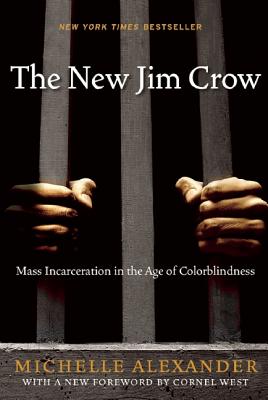
jim crow coverAs part of its programming surrounding our national day of remembrance in honor of the Rev. Dr. Martin Luther King, Jr., NPR’s Fresh Air brought scholar Michelle Alexander to the airwaves last night for a lengthy, fascinating interview. Alexander is the author of the book The New Jim Crow: Mass Incarceration in the Age of Colorblindness (out now in paperback with an introduction by Cornel West), and she argues persuasively that, as NPR puts it, “Jim Crow laws are now off the books [but] millions of blacks… remain marginalized and disenfranchised… denied [the] basic rights and opportunities that would allow them to become productive, law-abiding citizens.”

President Reagan’s “War on Drugs,” was declared, Alexander said, “primarily for reasons of politics—racial politics. … [these] racially coded ‘get-tough’ appeals on issues of crime and welfare appeal to poor and working-class whites, particularly in the South, who were resentful of, anxious about, and threatened by many of the gains of African Americans in the civil rights movement.” And so, the war on drugs keeps Jim Crow going:

Today there are more African Americans under correctional control—in prison or jail, on probation or parole—than were enslaved in 1850, a decade before the Civil War began. …In major American cities today, more than half of working-age African American men are either under correctional control or branded felons and are thus subject to legalized discrimination for the rest of their lives

In her conversation with Dave Davies, Alexander went on to explain that, while some, like criminologist David Kennedy, believe  anyone who’s spent time with those fighting the “War on Drugs” on the streets (that is, who’ve embedded themselves with beat cops and DEA agents) knows there’s absolutely no racial or class bias in who gets arrested for what, she’s found in her research that, for white, middle and upper-class kids, some crimes are considered rites of passage deserving only a slap on the wrist. Just a few miles away, though, in poorer communities of color, those same crimes (particularly the sale and use of recreational drugs, which Alexander says research has found are no more likely among black adolescents than white nor among poor vs. white kids) relegate young people to a life haunted by the legal system.

This, Alexander goes on, is especially problematic in one under-examined way: the disenfranchisement of convicted felons means that these communities, which are already low in political capital (that is, real political power), don’t even have the ability to go and vote for the politicians (and policies) that might improve their lives. “My experience and research has led me to the regrettable conclusion that our system of mass incarceration functions more like a caste system than a system of crime prevention or control,” concludes Alexander.