body

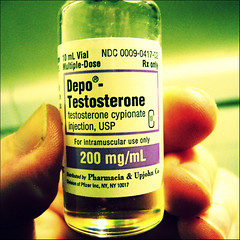
Photo by Shawn Henning, Flickr CC

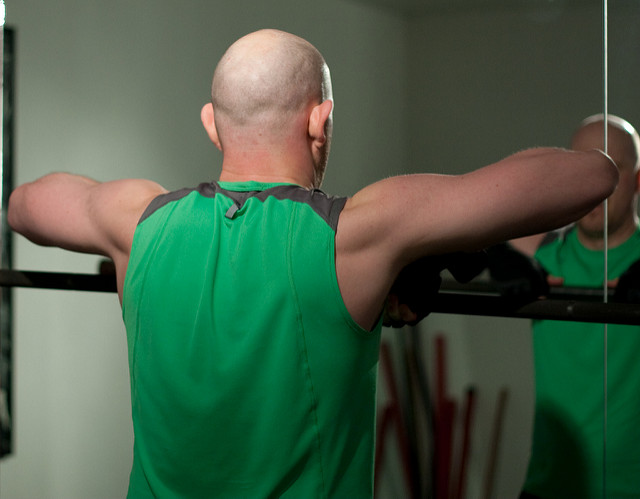
I’m sure few people were surprised by The Washington Post‘s recent headline, Women Rate the Strongest Men as the Most Attractive, Study Finds.” However, not everyone agrees on how to interpret these findings. While the authors of the study believe participants rated strong men as most attractive for evolutionary reasons, sociologist Lisa Wade argues we should look to culture for the answer.

“We value tall, lean men with strong upper bodies in American society,” she said. “We’re too quick to assume that it requires an evolutionary explanation…We know what kind of bodies are valorized and idealized. It tends to be the bodies that are the most difficult to obtain.”

Wade was not the only academic to express skepticism of the study’s causal claims. Holly Dunsworth, an anthropologist, argued that the methodology of the study was unable to support the author’s evolutionary explanation. “They made no link between any of those responses of those women to any sort of ancient, deep-seated evolutionary traits,” she said. Wade agreed, noting that much of this type of research has similar methodological problems. 
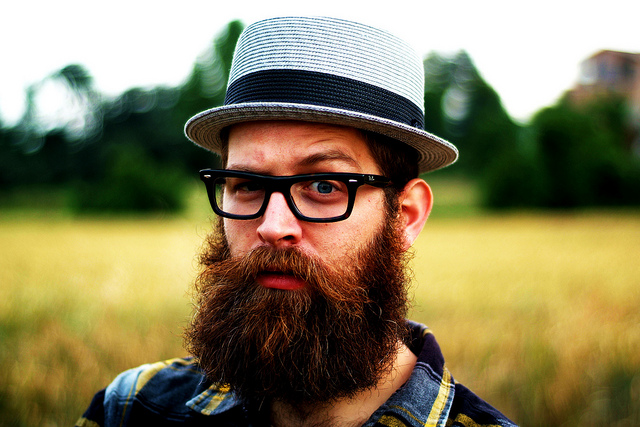
 

Photo by Juan Luis via Flickr.


Chin-Strap, Fu Man Chu, Burt Reynolds, or Full Marx. National competitions honor it. Hockey players grow it. Dress codes may moderate it, and now finally, sociologists weigh in on it. We’re talking beards.

In early April, a men’s fashion article in The Guardian explored the historical significance of beards, describing, for example, how early Egyptian pharaohs wore fake beards as a symbol of power. Since then, facial hair’s place in men’s fashion has waxed and waned, at times symbolizing political power while at other times representing radical lifestyles and rejections of social norms. French sociologist Stéphane Héas explained the political and social connotations of beards.

“Being hairless and clean-shaven, or not, is far from neutral,” Héas said. “Social norms determine how far a beard should be allowed to grow, when it should be trimmed or shaved off.”

He goes on to explain how facial hair has reinforced gendered power in modern western cultures:

The patriarchal, male-dominant nature of western society in the 19th and 20th century almost certainly explains the appeal of sophisticated beards and moustaches. Policymakers made their presence felt through their discourse and facial hair.

Yet despite the power and authority associated with having facial hair, Héas notes that, “being completely hairless has become almost mandatory for western women and is spreading to men.” The beloved beard may be on its way out yet again.

Photo from Persephone's Birth by eyeliam on flickr.com
Photo from Persephone's Birth by eyeliam via flickr.com

The so-called “mommy wars” have apparently made it all the way to the delivery room, according to Jennifer Block, writing for Slate:

For a long time home birth was too fringe to get caught in this parenting no-fly zone, but lately it’s been fitting quite nicely into the mommy war media narrative: There are the stories about women giving birth at home because it’s fashionable, the idea that women are happy sacrificing their newborns for some “hedonistic” spa-like experience, or that moms-to-be (and their partners) are just dumb and gullible when it comes to risk management…

For many parents, home birth is a transcendent experience. …Yet as the number of such births grows, so does the number of tragedies—and those stories tend to be left out of soft-focus lifestyle features.

Debates about home birth have erupted in the media and the blogosphere in recent months, largely focused on the relative risks of home birth versus hospital birth. But at the heart of the issue is who, and what evidence, to trust.

I could list several recent large prospective studies… all comparing where and with whom healthy women gave birth, which found similar rates of baby loss—around 2 per 1,000—no matter the place or attendant. We could pick through those studies’ respective strengths and weaknesses, talk about why we’ll never have a “gold-standard” randomized controlled trial (because women will never participate in a study that makes birth choices for them), and I could quote a real epidemiologist on why determining the precise risk of home birth in the United States is nearly impossible. Actually, I will: “It’s all but impossible, certainly in the United States,” says Eugene Declercq, an epidemiologist and professor of public health at Boston University, and coauthor of the CDC study that found the number of U.S. home births has risen slightly, to still less than 1 percent of all births. One of the challenges is that “the outcomes tend to be pretty good,” Declercq says…But to really nail it down here in the U.S., he says, we’d need to study tens of thousands of home births, “to be able to find a difference in those rare outcomes.” With a mere 30,000 planned home births happening each year nationwide, “We don’t have enough cases.”

And, as sociologist Barbara Katz-Rothman notes, decisions about where to give birth are likely made more on the basis of perceived, rather than real, risk.

“What we’re talking about is felt risk rather than actual risk,” explains Barbara Katz-Rothman, professor of sociology at the City University of New York and author of much scholarship on birth, motherhood, and risk. Take our fear of flying. “Most people understand intellectually that on your standard vacation trip or business trip, the ride to and from the airport is more likely to result in your injury or death than the plane ride itself, but you never see anybody applaud when they reach the airport safely in the car.” The flight feels more risky. Similarly, we can look at data showing our risk of infection skyrockets the second we step in a hospital, “but there’s something about the sight of all those gloves and masks that makes you feel safe.”

If anything positive came from the debacle that surrounded the International Association of Athletics
Federation’s attempts to ‘determine’ South African runner Caster Semenya’s sex, it is that it brought to light the crude methods that were being used to enforce the male/female binary in sports (See David Zirin and Sherry Wolf’s article in the Nation for critical coverage of the initial controversy).

Two years later the International Olympic Committee and the International Association of Athletics Federation, the governing body for track and field, have released a new policy to regulate athletes whose sex development is considered unusual to avoid a repeat of the nightmare that Semenya faced.

In a recent editorial in the The New York Times, Alice Dreger, professor of clinical medical humanities and bioethics at the Feinberg School of Medicine at Northwestern University, provides a critical read of the new policy. Dreger explains that initially the policy seems like an improvement because:

The new policy no longer allows any room for a simplistic “I know it when I see it” approach to who counts as a female athlete.

The new system relies on setting the ‘appropriate’ levels of functional testosterone a female athlete should have. However, as Dregger argues, this policy is fundamentally sexist. Both men and women naturally produce testosterone.

Yet despite the fact that testosterone belongs to women, too, the I.O.C. and the I.A.A.F. are basically saying it is really a manly thing: “You can have functional testosterone, but if you make too much, you’re out of the game because you’re not a real woman.”

Dregger explains that men are free of any equivalent biochemical policing and can take full advantage of any ‘mutation’ that gives him an advantage. In efforts to create ‘the mythical level playing field’ the committee has taken another step in a now rich history of controlling and categorizing women’s bodies. For women athletes who have more functional testosterone than is considered appropriate for a female the only option is to “submit to being made sexually ‘normal’ through hormone treatments” or they cannot compete.

While Dregger is sympathetic to the difficulties that I.O.C. and I.A.A.F. face, she finds little progress in the decision

this newly proposed biological reduction of women to a hormonally disadvantaged class of people — one medically made disadvantaged, if necessary — struck many of us as regressive from the standpoint of women’s rights. Indeed, it reminds me of those itty-bitty shorts that college women’s volleyball players must wear. They each sexualize the bodies of female athletes as a requirement of play. They each insist that a woman never be manly.

Perhaps the biggest take away point from Dregger’s article and the debates surrounding how to define and separate male from female in the sporting arena is that:

There is no perfect solution, one that is reasonably objective, universally applicable and universally satisfying.


Wild Card WeekendRecent medical reports on the long-term effects of head injuries have resulted in increased concern about the medical risks of participating in football. While the N.F.L. has increasingly shown concern over the safety of its players, a solution has not been found. The safety issues came to a head this past Sunday when a number of players were injured as a result of highlight reel hits.

Michael Sokolove’s article in the New York Times examines the moral issues surrounding consuming a sport where players place themselves at such a high risk. As medical studies continue to build the link between head injuries in football and depression, suicide, and early death, Sokolove asks the timely question:

Is it morally defensible to watch a sport whose level of violence is demonstrably destructive? (The game, after all, must conform to consumer taste.) And where do we draw the line between sport and grotesque spectacle?

To provide insight into the question Sokolove turns to a series of cultural theorists and philosophers who have interest in the role of violent pursuits in society.

The writer Joyce Carol Oates has written admiringly of boxing, celebrating, among other aspects, the “incalculable and often self-destructive courage” of those who make their living in the ring. I wondered if she thought America’s football fans should have misgivings about sanctioning a game that, like boxing, leaves some of its participants neurologically impaired.

“There is invariably a good deal of hypocrisy in these judgments,” Ms. Oates responded by e-mail. “Supporting a war or even enabling warfare through passivity is clearly much more reprehensible than watching a football game or other dangerous sports like speed-car racing — but it may be that neither is an unambiguously ‘moral’ action of which one might be proud.”

Other ‘experts’ argue that the dangerous activity may serve a communal goal.

“We learn from dangerous activities,” said W. David Solomon, a philosophy professor at Notre Dame and director of its Center for Ethics and Culture. “In life, there are clearly focused goals, with real threats. The best games mirror that. We don’t need to feel bad about not turning away from a game in which serious injuries occur. There are worse things about me than that I enjoy a game that has violence in it. I don’t celebrate injuries or hope for them to happen. That would be a different issue. That’s moral perversion.”

Fellow philosopher Sean D. Kelly, the chairman of Harvard’s philosophy department, shares Solomon’s emphasis on the potential positive value of sports:

“You can experience a kind of spontaneous joy in watching someone perform an extraordinary athletic feat,” he said when we talked last week. “It’s life-affirming. It can expand our sense of what individuals are capable of.”

He believes that it is fine to watch football as long as the gravest injuries are a “side effect” of the game, rather than essential to whatever is good about the game and worth watching.

Sokolove concludes with the difficult question that football fans, as well as organizers and sponsors of the sport at all levels, must now ask themselves:

But what if that’s not the case? What if the brain injuries are so endemic — so resistant to changes in the rules and improvements in equipment — that the more we learn the more menacing the sport will seem?

Two weeks into Breast Cancer Awareness Month, the pink ribbons have been fluttering in full force. A New York Times blog urges a little reflection on the meaning of this now ubiquitous phenomenon:

The pink ribbon has been a spectacular success in terms of bringing recognition and funding to the breast cancer cause. But now there is a growing impatience about what some critics have termed “pink ribbon culture.” Medical sociologist Gayle A. Sulik, author of the new book “Pink Ribbon Blues: How Breast Cancer Culture Undermines Women’s Health” (Oxford University Press), calls it “the rise of pink October.”

“Pink ribbon paraphernalia saturate shopping malls, billboards, magazines, television and other entertainment venues,” she writes on her Web site. “The pervasiveness of the pink ribbon campaign leads many people to believe that the fight against breast cancer is progressing, when in truth it’s barely begun.”

The campaign builds on a long history of breast cancer activism, beginning in the 1970s, and now represents mainstream recognition of the cause.

So how can the pink ribbon be objectionable? Among the first salvos against the pink ribbon was a 2001 article in Harper’s magazine entitled “Welcome to Cancerland,” written by the well-known feminist author Barbara Ehrenreich. Herself a breast cancer patient, Ms. Ehrenreich delivered a scathing attack on the kitsch and sentimentality that she believed pervaded breast cancer activism.

A few additional critiques:

In “Pink Ribbon Blues,” Ms. Sulik offers three main objections to the pink ribbon. First, she worries that pink ribbon campaigns impose a model of optimism and uplift on women with breast cancer, although many such women actually feel cynicism, anger and similar emotions.

And like Ms. Ehrenreich, Ms. Sulik worries that the color pink reinforces stereotypical notions of gender — for example, that recovery from breast cancer necessarily entails having breast reconstruction, wearing makeup and “restoring the feminine body.”

Finally, Ms. Sulik closely examines what she calls the “financial incentives that keep the war on breast cancer profitable.” She reports that the Susan G. Komen Foundation, which annually sponsors over 125 annual Races for the Cure and more than a dozen three-day, 60-mile walks, has close to 200 corporate partners, including many drug companies. These associations, she warns, are a potential conflict of interest.

Read the rest.

ABC News explores some possible causes of obesity that are often overlooked.

Sure, most of the nation needs to eat less and move more. But is that the only reason America is so fat?

As more scientists and sociologists look at our bulging waistlines, some unusual explanations for the nation’s weight gain in the last 30 years are popping up.

The article discusses an intestinal bacteria that may contribute to weight gain and particular genes that may influence the success or failure of dieting.

Beyond these physical explanations, social factors may also contribute to obesity. A Harvard medical sociologist weighs in:

In 2007, an article in the New England Journal of Medicine used 30 years of data on 12,000 people to show obesity and weight loss may actually be contagious — things that spread among people who know each other.

“They key idea is that people are influenced by the behavior and actions of those around them. This applied to something that people may not have thought of, which is body size,” said Dr. Nicholas A. Christakis, author of the recent book “Connected,” which looks at how various phenomena from depression to obesity spreads through society.

Over the three decades, Christakis showed how obesity in one person in a circle of friends statistically meant more people in their circle of friends would become obese. The same was true of weight loss.

“We’re not saying we found the cause of the obesity epidemic. We’re not,” said Christakis. “Social networks have a general property that they magnify what they are seated with.”

While Christakis could show an obesity epidemic spreading through friend networks, he could only make an educated guess why.

“One possibility is that you start doing things — certain behaviors that I copy,” said Christakis.

So if one friend starts serving beer and cookies all the time, perhaps another friend will pick up the habit. Or if one friend joins a running club, perhaps another friend will join it too.

Christakis said another possibility is that “What’s spreading between people is an idea, or a norm.”

For example, if most people a person associates with are overweight, then that person’s idea of “normal weight” is likely to be bigger than what is actually healthy.

Read more.

Day 167/365 - Pure EvilMany skinny Americans are fed up with obesity, reports the Los Angeles Times:

“Americans as a society are getting fed up with the matter of obesity. No doubt about it,” said Douglas Metz, chief of health services for American Specialty Health, a San Diego-based company that offers wellness programs to employers. “Some pockets of society are taking positive action, and unfortunately others are taking negative action. That’s what happens when a society hasn’t figured out what the fix is.”

Recent notable actions include:

* A recent and ultimately unsuccessful plan at Lincoln University in Pennsylvania sought to take the body mass index of every enrolling student and require the obese to lose weight or take a fitness class before they could graduate.
* In Mississippi, legislators tried to pass a bill to let restaurants prohibit obese people from dining.
* In an interview with the New York Times last August, Toby Cosgrove, chief executive of the Cleveland Clinic, one of the nation’s largest medical centers, provoked national outrage when he said that, if it were up to him, he would stop hiring the obese. He later apologized for his remarks.
* Last summer in Florida, animal rights activists at People for the Ethical Treatment of Animals (PETA) took aim at heavy women in a “Save the whales” billboard campaign that featured an overweight, bikini-clad woman. It read: “Lose the blubber. Go vegetarian.” Angry reactions caused the organization to remove the signs.

Statistics about obesity are being assessed in the current debates on how to reduce the nation’s health care costs:

A report by Emory University researchers projected last November that by 2018 the United States could expect to spend $344 billion on healthcare costs attributable to obesity. Obesity-related costs would account for 21% of healthcare spending, up from 9.1% today, said the report, sponsored in part by the United Health Foundation and the American Public Health Assn.

Providing a different take on the issue, it’s time to call in the sociologist:

“In our society, being heavy has become more of a stigma lately because we’re struggling with other issues of consumption,” says Abigail Saguy, associate professor of sociology at UCLA.

The economic climate, a recent history of people buying more than they can afford as well as environmental issues, including the depletion of our planet’s resources, are making people feel more angry about society’s overconsumption, she says. Obviously overweight people are an easy target.

“They’re almost a caricature of greed, overconsumption, overspending, over-leveraging and overusing resources,” says Saguy. “Though it’s not entirely rational, it’s an understandable reaction, especially in a country founded on the Puritan ethics of self-reliance, sacrifice and individual responsibility. If people feel they’re sacrificing, then see someone spilling over an airplane seat, they feel angry that that person is not making the same sacrifices they are.”

Research indicates that discrimination based on weight has been increasing in recent years:

Rebecca Puhl, a researcher at Yale University’s Rudd Center for Food Policy and Obesity, published [two papers] last January — one in the journal Obesity, the other in the International Journal of Obesity — Puhl reported that weight discrimination in the United States increased 66% over the prior decade.

“Weight discrimination is highly prevalent in American society and increasing,” said Puhl, who cites several possible reasons. Among them are a lack of legislation to prohibit weight discrimination and an increase in media coverage of obesity (up fivefold from 1992 to 2003). Most media framed the problem of obesity as one of personal responsibility, she reported.

New research on the social network effects of obesity was recently reported in the Guardian UK:

Children at schools where older students are obese or otherwise overweight are significantly more likely to suffer weight problems themselves, researchers report.

For each one per cent increase in the prevalence of obese students aged 16 to 18 years, the odds of a student at 14 to 16 years old attending that school also being overweight increased significantly.

“It was the one risk factor that held true across every school we looked at,” said Dr Scott Leatherdale, the chair of research at Cancer Care Ontario and lead investigator with the School Health Action, Planning and Evaluation System.

Commenting on the obesity connection between older and younger students, Leatherdale says:

It could be that younger students look up to older students, and so emulate their sedentary behaviour and bad eating habits and do not judge the older children’s body shape.  Or it could be that the school doesn’t encourage enough physical activity among its students, and the older students’ weight issues are an indication of that.

Sociologist Steve Fuller at Warwick University concurs with his assessment:

Obesity is one phenomenon that medical sociologists have nominated as an ‘epidemic’ that is transmitted by copying the behaviour of peers.  Certain connections between overeating and social activities become contagious. Young people gather together in more stationary modes than in the past: in front of computers and video games rather than sports.

The reason it’s called an ‘epidemic’ is because the pattern is reinforced by regular contact, so that if one is not in regular contact with the pattern, one doesn’t spontaneously do it The idea is that you overcome obesity by breaking up the networks where it’s transmitted.

Controversial title?Countries are looking for ways to boost organ donation, according to the New York Times. Most recently, Israel has created a policy to give priority for organ transplants to those who sign up to be organ donors themselves.

Officials hope the incentive will increase the supply of available organs — of which there is a shortage across the world, but especially in Israel, where only one in 10 adults carries a donor card.

This is sure to be a closely watched change, as most countries have tried different measures to increase willingness to donate organs. Here’s a rundown of some of those efforts, which include (1) creating markets for organs; (2) making all citizens organ donors by default, unless they explicitly exempt themselves; and (3) investing in more health care infrastructure.

Such plans have raised a few ethical eyebrows, however:

Proposals to change the organ procurement systems in the United States and Great Britain to “presumed consent” have frequently provoked ethical objections. Critics worry that such a system would effectively coerce people into donating organs, even over the wishes of the next of kin.

Ethics aside, it’s also not clear that such programs actually produce more donations.

A sociologist comments on the quandry:

Perhaps this is because — as Kieran Healy, a sociologist at Duke University has found — “opt-out” and “opt-in” systems are really not that different in practice. In both, doctors still typically defer to the wishes of the deceased’s family, whatever the official donor status of the deceased.

In a 2006 article in the DePaul Law Review, Professor Healy argued that presumed consent laws didn’t seem to be the key to improving cadaveric organ donation rates. Rather, infrastructure investments did.

Countries that experienced the biggest donation increases in recent years, like Spain and Italy, were those that hired more transplant coordinators, started public awareness campaigns, installed 24-hour organ retrieval teams at hospitals and improved training for doctors who talk to grieving families.

He concludes:

Arguments about altruism versus self-interest and disputes over presumed and informed consent together constitute a good portion of the public discussion about organ donation. Yet neither debate helps us explain why some countries have many more organ donors than others. As best we can tell, countries with high procurement rates do not owe their success to any distinctive legal conception of consent, nor to any special way of institutionalizing exchange in human goods. Rather, more fine-grained organizational differences– specifically in logistics and process management — are responsible for their success.