
In a brand new piece for Slate, journalist Libby Copeland marshals the social scientific evidence to ask whether, as in so many other areas of social life, looks matter in politics. It’s been, she writes, “conventional wisdom” since the televised Nixon-Kennedy debate in 1960 (see clip above) that a candidate in the modern age simply can’t avoid the fact that their very face will affect their polling numbers. Put more provocatively, Copeland asks, “How much does Newt Gingrich’s face hurt him?”
What’s really intriguing here, though, is that the assumption, for the longest time, was that it was attractiveness or beauty that would confer an advantage to the aspiring politico. To be sure, “Attractive people appear to benefit in all sorts of situations, like in the workplace and legal situations. Heck, even babies are predisposed to focus on good-looking faces,” Copeland writes. But 2005 research from Princeton’s Alexander Todorov and other researchers asserted “voters appeared primarily drawn to faces that suggested competence,” not a Crest commercial smile and perfect symmetry. “The competent face shape,” Copeland gleans, “is masculine but approachable, with a square jaw, high cheekbones, and large eyes. When people say Romney just looks presidential, this is the image they’re summoning.”
In follow-up studies, political scientists went on to confirm the Todorov findings, but refined them, pointing out that it was mainly less-informed voters who watched a lot of television who demonstrated the “competent face” effect. Copeland goes on to explore some other studies in psychology and political science which subtly altered the images of real politicians (in one case, even blending it with the study subject’s own photograph—“After all, who’s more competent and trustworthy than you?” the author asks) to consider other ways that looks shape elections. She concludes:
Taken all together, these new studies suggest how a politician’s face appeals to voters, or doesn’t, can’t be boiled down to just one factor. Rather, voters look at a candidate and make a series of instant judgments based on a number of traits. Then… they listen to the candidate, they consider the issues, and they do all the things rational voters are supposed to do. Skin-deep inferences aren’t all that voters rely on, though they may have an outsized effect on the decision-making process.
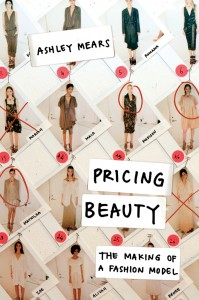 d spent some time in the New York fashion scene and looked closely among the high heels, you might have spotted one model taking scrupulous field notes as seriously as she took the runway. Ashley Mears, assistant professor of sociology at Boston University and author of the book Pricing Beauty, immersed herself into the world of modeling by actually becoming a model. A recent